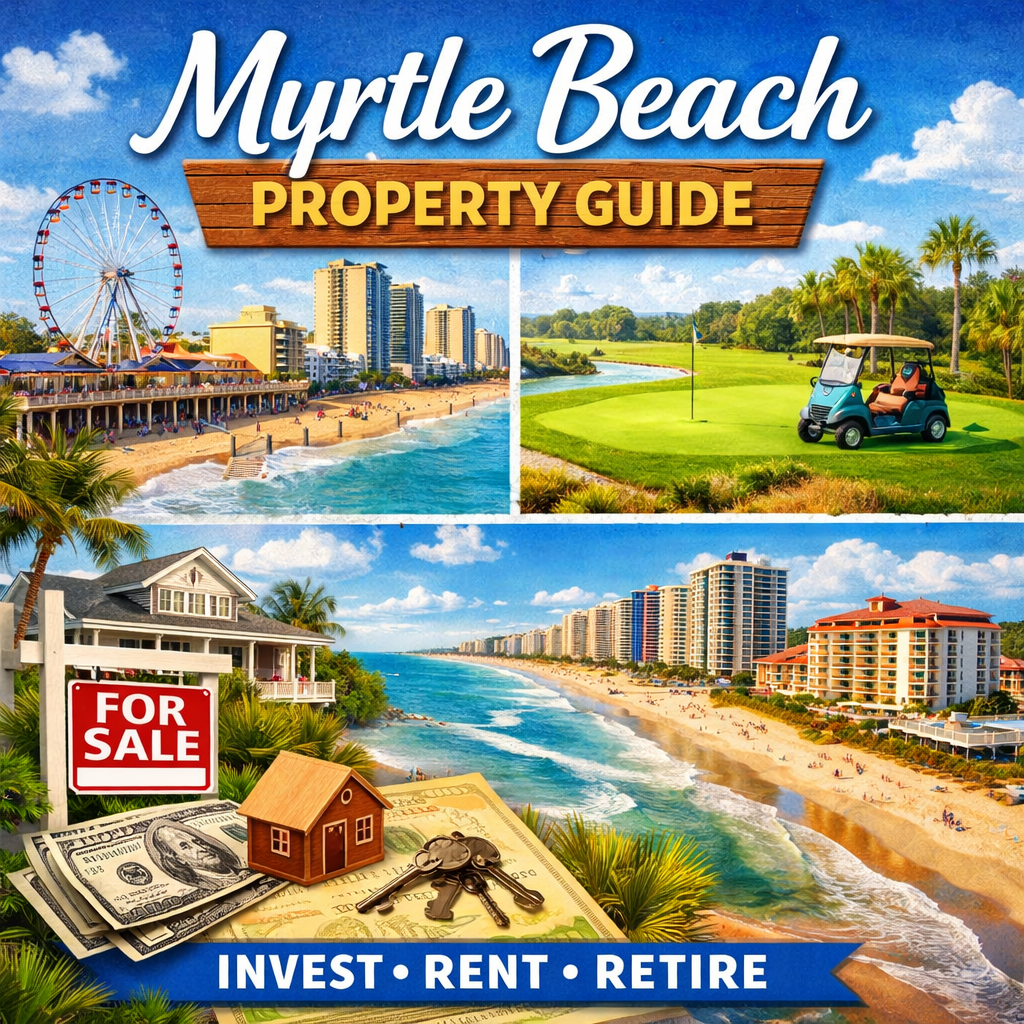
Introduction: Why Myrtle Beach Deserves a Spot on Your Investment Radar
There are beach towns, and then there is Myrtle Beach. Stretching along 60 miles of South Carolina's Atlantic coastline, this vibrant coastal city has long captured the hearts of vacationers, retirees, and savvy real estate investors alike. With its golden sandy shores, warm subtropical climate, and a cost of living that remains far more accessible than comparable beach markets, Myrtle Beach occupies a unique sweet spot in the American property landscape.
But buying a home or investment property anywhere requires more than browsing listings online. You need to feel the rhythm of a place, understand its neighborhoods, experience its seasons, and envision your life within its geography. That is exactly what a well-planned visit to Myrtle Beach can give you. Whether you are drawn by the idea of a vacation rental generating passive income, a retirement retreat, or a permanent coastal relocation, this travel guide will walk you through everything you need to see, explore, and evaluate before you sign on the dotted line.
Section 1: Getting to Know the Landscape, Neighborhoods, and Lifestyle
Myrtle Beach is not a single destination; it is a collection of distinct communities, each with its own personality, price point, and appeal. Understanding these neighborhoods during your visit is perhaps the most important groundwork you can lay as a prospective buyer.
The heart of it all is the Grand Strand, a 60-mile stretch of coastline that runs from Little River in the north down to Pawleys Island in the south. Within this corridor, areas like North Myrtle Beach tend to attract families and long-term residents looking for a quieter, more residential feel. The downtown Myrtle Beach area, centered around the iconic boardwalk, buzzes with tourist activity year-round and is prime territory for short-term rental investors targeting visitors who want to be in the thick of things.
Further south, communities like Surfside Beach and Murrells Inlet carry a more laid-back, small-town character. Murrells Inlet, in particular, has earned its title as the "Seafood Capital of South Carolina," and its marshwalk lined with waterfront restaurants and marinas makes it one of the most charming areas to spend an evening. Buyers interested in a slower pace of life without sacrificing coastal access tend to fall hard for this stretch of the Grand Strand.
During your visit, rent a car and simply drive. Take Ocean Boulevard from one end of the strip to the other. Wind through the residential streets of Carolina Forest, one of the fastest-growing master-planned communities in the state, where large family homes sit alongside top-rated schools and retail conveniences. Spend a morning at Barefoot Landing in North Myrtle Beach and an afternoon exploring the quiet inlets of Pawleys Island. These firsthand impressions will shape your investment decisions far more powerfully than any online search filter ever could.
Section 2: What to Do, See, and Experience as a Visitor (and Future Resident)
A visit to Myrtle Beach should be part vacation, part scouting mission. The good news is that both objectives align beautifully because the experiences that make this destination attractive to tourists are largely the same ones that make it desirable for long-term living.
Start with the beaches themselves. The wide, gently sloping shores are ideal for swimming, surfing, shelling, and early morning walks. During peak season, Myrtle Beach State Park offers a more natural, uncrowded alternative to the bustling main beach, and its proximity to nature trails and the Atlantic Ocean makes it a beloved feature for residents who crave outdoor space.
Golf is a defining pillar of the Myrtle Beach lifestyle. With over 80 championship courses woven throughout the Grand Strand, this region rivals any golf destination in the country. For potential buyers who love the sport, a property here is not just a home; it is a lifestyle upgrade. Many residential communities are built around these courses, offering stunning views and easy tee-time access.
The entertainment and dining scene has evolved considerably over the past decade. Broadway at the Beach remains a top draw for tourists, featuring restaurants, live entertainment, and the largest concentration of retail in the region. However, the local food scene extends well beyond the tourist zones. Local oyster bars in Murrells Inlet, fresh seafood shacks along Highway 17, and an increasingly diverse range of restaurants reflect the growing permanent population and its sophisticated tastes.
For those comparing coastal destinations before making a decision, consider that even iconic experiences like tours new zealand offer are rooted in the same principle that makes Myrtle Beach compelling: the best destinations reward those who take the time to explore them on foot, by car, and through genuine local experiences, not just a highlights reel.
Section 3: The Real Estate Market, What Buyers Need to Know
No property buying guide would be complete without a frank look at the market dynamics. Myrtle Beach has been one of the most consistently performing real estate markets in the southeastern United States, driven by a steady influx of retirees from the Northeast and Midwest, strong short-term rental demand, and relatively affordable entry prices compared to Florida's coastline.
As of the mid-2020s, the median home price in the Myrtle Beach area remains significantly below the national average for coastal markets. This affordability factor, combined with South Carolina's relatively low property taxes and the absence of a state income tax on retirement income, creates a compelling financial case for buyers considering this market seriously.
The short-term rental market is particularly robust. Platforms like Airbnb and VRBO see strong year-round booking activity in Myrtle Beach, though peak season runs from Memorial Day through Labor Day. Buyers targeting investment properties should research HOA regulations carefully, as some communities restrict short-term rentals while others are specifically designed to accommodate them.
During your visit, take time to walk through open houses in different price brackets. Talk to local real estate agents who specialize in the area; their knowledge of upcoming developments, flood zones, and neighborhood trajectory is invaluable. Pay attention to which communities are growing, where new infrastructure investments are being made, and how close properties are to both beach access and everyday conveniences like grocery stores, healthcare facilities, and major roads.
One consideration that many first-time coastal buyers underestimate is insurance. Properties near the water in South Carolina require wind and flood insurance in addition to standard homeowner's coverage. Factor these ongoing costs into your budget early in the process, and ask local agents to walk you through realistic annual insurance estimates for properties you are seriously considering.
Section 4: Practical Tips for Planning Your Property-Buying Trip
Visiting Myrtle Beach with the specific intention of evaluating it as a place to buy requires a slightly different approach than a standard leisure trip. Here is how to make the most of your time on the ground.
Plan your visit during shoulder season, typically March to May or September to October. During these months, the crowds thin out, rental prices drop, and you get a much more honest picture of what everyday life looks like in the community. It is easy to fall in love with any beach town during the height of summer; the real test is how a destination feels when the tourist tide recedes.
Schedule at least three to four full days, ideally a week. Use the first couple of days to explore different neighborhoods without any pressure. Eat at local spots that are not on the main tourist strips. Visit the Chapin Memorial Library in downtown Myrtle Beach, stop by a farmers market, and attend a community event if timing allows. These experiences reveal the texture of a community in ways that no real estate brochure can replicate.
In the latter half of your visit, begin scheduling appointments with real estate agents and attending open houses. Come prepared with your budget, financing pre-approval if possible, and a clear list of must-haves versus nice-to-haves. Bring a notebook or use a property tracking app to record your impressions of each neighborhood and home you visit.
Finally, take time to speak with current residents. Strike up conversations at coffee shops, on the beach, at the golf course. Ask people what they love about living there and what they wish they had known before moving. These candid conversations are among the most valuable research tools available to any prospective buyer.
Conclusion and Call to Action: Your Next Chapter Starts with a Visit
Myrtle Beach is more than a beach town. It is a dynamic, growing community with a real estate market that rewards informed buyers, a lifestyle that suits retirees, families, and investors alike, and a natural beauty that simply does not get old. Whether you are dreaming of a vacation rental that pays for itself, a retirement home where every morning begins with an ocean sunrise, or a permanent coastal lifestyle, Myrtle Beach deserves serious consideration.
The first and most important step is to go see it for yourself. Plan your trip, explore the neighborhoods, talk to the locals, walk the beaches, and eat the seafood. Let the place speak to you before you let the listings do the talking.
When you are ready to move from visitor to property owner, connect with a local real estate professional who knows the Grand Strand inside and out. Request a market analysis for the neighborhoods that interest you most, attend open houses with clear intention, and do not rush the process. The right property in the right community is worth taking the time to find.

