Shopping for your first home can be both one of the most exciting and one of the most nerve-wracking periods of your life. After all, you’re making a decision that carries major, long-term ramifications that could have reverberating effects as the years go by. While you are not promising to have the house for forever, odds are that you will have it for quite some time, and a lot of momentous things will happen during those years. Maybe you will have kids for the first time. Maybe you will have more kids than you initially expected. Maybe you won’t have kids at all! Maybe you will get a big promotion. Maybe you won’t.
Frankly, there are just so many things to consider when making the long-term commitment that comes with buying a house. All of these things can be stressful and overwhelming, to say the least. However, they are equally accompanied by joy and excitement, and choosing the right house can mean years of great memories, minimal stress, and endless bliss. So, what are some things that you should be sure to do (or not to do) as a first-time homebuyer to guarantee this happiness? We will address some of the big ones below, so keep reading!
1. Not Checking Credit Reports

In this post, we are going to talk a lot about mortgages. This is not just a post about mortgages, of course, but your mortgage is definitely one of the biggest pieces of the homebuying puzzle. Getting the right deal on your mortgage is key to alleviating financial woes (or regrets) over the coming years. While there are a lot of parts of the mortgage process that are out of your control, there are a lot of things that you do have some power over. One of those things is your credit report.
When you apply for a mortgage, you are typically going to be thoroughly vetted. After all, the mortgage lender wants to make sure that you are a viable candidate who they can trust to make consistent payments over a 30 year timeline. One of the first places that they will look is your credit report. This is not just your FICO credit score that credit cards look at. This is a comprehensive report about your current credit balances, your credit history, and more. The report is pretty extensive, and it is not uncommon for errors to pop up. Loans that don’t actually exist, credit cards that you closed that appear to still be open, balances or payment records that are inaccurate, and misspellings of names and addresses that cause errant information notifications can absolutely exist, and they can really cause problems when it comes to getting your loan terms or even your loan approval.
Checking your credit report and correcting any errors with the credit bureau before you start shopping for a mortgage is always a really good idea that borrowers tend to overlook. They assume that the credit bureau is perfect, when in reality it is just run by humans who are prone to mistakes. Correcting any discrepancies before you contact mortgage lenders can earn you much more favorable terms on your mortgage, which can save you thousands of dollars at the end of the loan.
2. Skipping the Inspection
No house is flawless – not even if you just had it built. Houses are made to last, for sure, but they are prone to errors and imperfections. Over time, it is natural for a house or its appliances to need a repair; those are just the duties of homeownership! Repairs to the roof, structure, and appliances are common occurrences that you are certain to deal with during the home’s life.
The problem, though, is that you don’t want to have to deal with them right off the bat. Nobody wants to buy a house and then find out a month after closing that the basement wall is caving in or the roof is leaking. Nobody wants to be looking at different water heater models right after they move into their new home. These are just not friendly, fun activities that new homeowners want to deal with!
To avoid these issues, make sure that you have a contractor go in and thoroughly inspect the house. It will cost you a little money, sure, but the money you pay a contractor to check out the health of the house is much less than the cost of a new roof or a new water heater. Some necessary repairs, like cracks in the foundation, should be dealbreakers. Others, like a faulty water heater or a leaky roof, can be used as negotiation pieces to lower the price of the house. For example, if you know that you need a new roof on the house and that it will cost $10,000, you can use that knowledge to get the seller to lower the price by $8,000-10,000 or require that they pay for a new roof before you close on the house.
3. Not Researching the Neighborhood
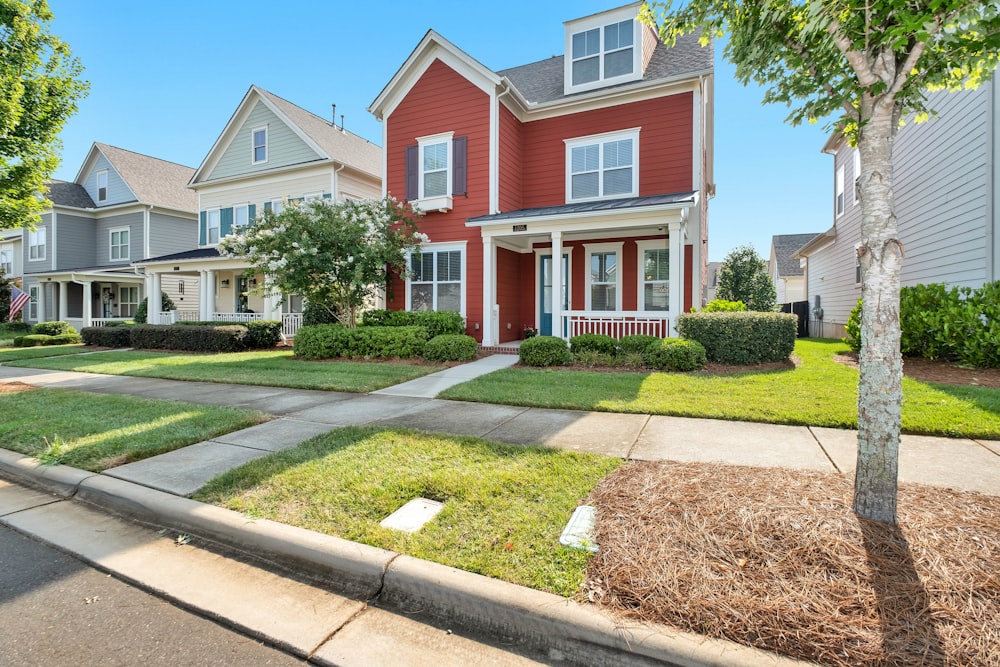
Everyone wants to buy their dream house, and sometimes things are just too good to be true. You have finally found the four bedroom, 5 bathroom house of your dreams with a big yard for the kids to play in and a cool space to turn into a bar downstairs! How great! And it is even within your price range!
…Except that this sounds too good to be true, right? Often, it is. One of the biggest reasons for this is that the neighborhood is either unsafe, inconvenient, poorly maintained, or in a bad school district. The house of your dreams may be great, but what if sitting in the front yard isn’t safe? What if the public school district you live in has horrible standardized test scores? What if there is no grocery store within a 20-minute drive? What if the neighbors are just rude people? All of these things should play into your decision in some way.
Home prices are typically lower in rural, disconnected areas. They are also lower in what are considered to be “bad” neighborhoods. Maybe these are sacrifices that you are willing to make, and maybe they aren’t. Whatever you choose is fine, but what is important is that you make an educated, knowledgeable decision. The house is the most important component, for sure, but the infrastructure of the community and neighborhood should factor into your decision, too.
4. Moving Too Quickly

If you have ever shopped for an apartment – especially in recent years in urban areas as they have adopted dynamic pricing – you may know the importance of moving quickly. In big cities, apartments fill up rapidly and your options dwindle right in front of your eyes. Dynamic pricing also makes signing a lease today cheaper than signing in a week, and the price rises the further out you look to sign. There are many things that might pressure you to speed up and get moving. The house you’re interested in might get bought by someone else! The interest rates might rise! What will you do if your dream house on the corner gets bought by someone else?
You will take a deep breath. That is what you will do. The fact of the matter is that apartment leases only last around a year. If you strike a bad deal on a lease, the worst thing you need to do is live there for a year and then move. If you strike a bad deal on a house, though, you are stuck living in that house and paying on that mortgage for much, much longer.
Good things come with time, and patience pays dividends when it comes to house shopping. While there is such a thing as moving too slowly, too, taking your time is the best way to ensure that you get a good deal and pay the right price on the right home. Take the time for a thorough inspection. Take the time to negotiate on price. Take the time to work with several mortgage lenders. Take the time to truly ponder whether or not the house that you are looking at is the one that you want to move into. Don’t sign on any dotted lines until you are confident that you have thought about every angle of the purchase. Once you can tell yourself that you have analyzed the situation as well as you can, then feel free to sign.
5. Burning Through All of Your Savings

20% down payments are steep, aren’t they? Saving up for 20% of a house in cash is no easy task. That literally takes years. If you are buying a $300,000 house, for example, 20% is $60,000. If you save $1000 per month, which is a lot of money for most people to be saving on top of their bills and rent, it will take five years to save up for that down payment. Since that time window is so long, many first-time homebuyers are excited to finally pull the trigger on a home when they have enough saved up for the down payment. Logically, this makes sense!
The problem, though, is that dumping all of your savings into your down payment leaves you completely exposes to any financial hurdle that might arise. If you move in and the roof starts leaking, where are you going to get the $10,000 to fix it? If you get in a car accident and need to shell out $1,000 for your insurance deductible, where are you going to get it? What if you get hit with an unforeseen tax bill and you need to strap together some cash? There are many things that can happen after you buy a home that expose you financially, and having nothing left in your savings is a very dangerous position to be in.
To avoid this issue, be sure to save up more than the required down payment. While a 20% down payment is ideal, it is not set in stone. You can certainly opt for a 10% or 15% down payment – or lower, even – instead of the gold standard of 20%. While this will make your monthly payments go up, it leaves you at least a little more financially protected in the short term. If you can afford the 20% down payment, it is often prudent to do it. However, if the 20% is stretching you thin or cleaning you out, find a way to pay a smaller down payment or look for a less expensive home overall.
6. Not Budgeting Properly

On that note, are you even shopping in the right price range? Many first-time homebuyers do a few simple calculations to find out how much house they can afford, and they start shopping directly in that window. While these calculators are generally a great tool, they often fail to assess your full financial picture. You mention that you can afford to pay $40,000 down and you make $4,000 after tax per month, and they spit out a number telling you how much you can afford to pay each month. Easy, right?
The problem here is that the calculators don’t dive deeper. Just because you have $40,000 to put down doesn’t mean that you should put $40,000 down. As we just talked about, you don’t want to empty out your savings account to make a down payment. On top of that, many mortgage calculators fail to include the hidden costs of homebuying, like paying an inspector, closing costs, mortgage insurance, and other fees. Additionally, these calculators almost never factor in normal costs of homeownership, like repairs, property taxes, HOA fees, and utilities. There are a lot of bills that come with homeownership that don’t come with renting an apartment, and not considering them alongside your monthly mortgage payment is one of the biggest errors that you can make when purchasing a new home.
7. Only Getting One Mortgage Quote

To some, this may sound obvious. To others, it may be something they would never even think of. Still, it is absolutely worth including in this post! Many prospective homebuyers think that mortgages are one-size-fits-all and that every bank will offer the same package. They just go apply for a mortgage at the same bank where their checking account is and call it a day. This is a grave error, though, as you never know what the best offer is until you look around. Talking with several different mortgage lenders is one of the most important things you can do during the homebuying process to guarantee that you are getting the best deal possible.
While mortgage rents tend to be similar across lenders, they are not always identical. Each lender has its own criteria, and you may be seen as more favorable with one and less favorable with another. You never know who will give you the best offer, and comparing a few is essential.
On a similar note, it is crucial that you get pre-approved for your mortgage before you start shopping for a house. This helps the process to move along more smoothly, and it also guarantees that you are shopping for houses that are within your actual price range. It is never fun to be looking at $400,000 houses just to realize that the bank will only give you a mortgage for up to $350,000, and it is also a bit deflating when you’re shopping in the $200,000 range and the bank approves you for up to $400,000. Getting pre-approved makes the whole process move a little more smoothly, so you definitely want to make sure that you do it.
8. Skipping the Realtor to Save Some Money

Many first-time homebuyers learn that realtors take 3% of the selling price as a commission when the deal closes and get intimidated. After all, that is thousands of dollars! Could this not be avoided? Is a realtor even necessary? Finding a house on your own and contacting the seller ought to be easy enough to do on your own, right?
Wrong. This is a grave mistake that many first-time homebuyers make, or at least consider making. Realtors are not your enemy. They are your friend. Nobody understands the homebuying process better than realtors, and their savvy is worth a lot more than to you than the fee you pay when the deal closes. Realtors make sure that you get the best deal possible on the house, they make sure that the houses you’re looking at are good options for you, and they make sure that you cross all your t’s and dot all of your i’s along the way. While their role or purpose seems unnecessary to some first-time homebuyers, their value is immeasurable. They are a huge asset, and you want to make sure that you do not skip out on them to try to save money. You will not regret it!
Thanks for reading our post about 8 mistakes that first time homebuyers tend to make. We hope that this post has been helpful and informative as you go through the homebuying process. Again, remember that buying a house is one of the biggest commitments that you will make in your life, and getting out of homeownership is both difficult and expensive. For that reason, and for your own happiness, it is crucial that you pick the right house and strike the right deal with the seller and the mortgage lender. Hopefully these tips help you to do that!
If you visit Myrtle Beach or any other place in South Carolina and fall in love, we’re here to help. We at The Boyd Team are committed to helping you find the right property for your needs and dreams. Any question that you have about moving to the area and finding your dream home by the beach is our pleasure to answer. Feel free to send us an email at eddie@boydteam.com or text or call us at (843) 222-8566, and we will get back to you as soon as we can. Being true natives of the Grand Strand and Horry County and with over 25 years of experience in the local real estate market, whether buying or selling, we can help you make your dreams a reality.
No One Knows The Grand Strand Better! Trust, Knowledge, Experience, Professionalism, You Can Count On!

