We Specialize in Myrtle Beach, SC Real Estate. Lots of options are waiting for you in Myrtle Beach, South Carolina and choosing the right realtors can help you in finding the perfect area and the right home for you and your family and make your dream a reality! Let us help you in making one of the biggest, if not the biggest, decisions in your life.
We were both born and raised along the Grand Strand and know the entire Horry County, so no matter what style of home you are looking for or what area you prefer, we can help you! Please give us a call and let us help you make your dream a reality! 843-222-8566.
Lighting Steps 1. Go to the main electrical panel and turn off the power to the existing under cabinet lights and outlets. 2. Unscrew the old light fixtures from the underside of the cabinets. 3. Use a jigsaw to cut a hole in the cabinet back for an old-work junction box. 4. Cut a similar hole in the wall directly above the cabinets. 5. Push two nonmetallic electrical cables through the upper hole and down into the hole cut inside the cabinet. 6. Cut a hole in the kitchen wall for an old-work switch box, then use a fish tape to pull a cable into the hole. 7. Push the ends of the cables through the rear of the switch box, then screw the box to the kitchen wall. 8. Wire a dimmer switch into the box; be sure the switch is designed for use with LED lights. 9. Make the wire connections in the junction box inside the cabinet. Screw a blank cover onto the junction box. 10. Make the wire connections inside the light fixtures, then screw the fixtures to the underside of the cabinets. 11. Run a new cable to the wall beneath the cabinets, then install the 120-volt outlet strips. 12. Make the final wire connections at the outlet strips and test your work.
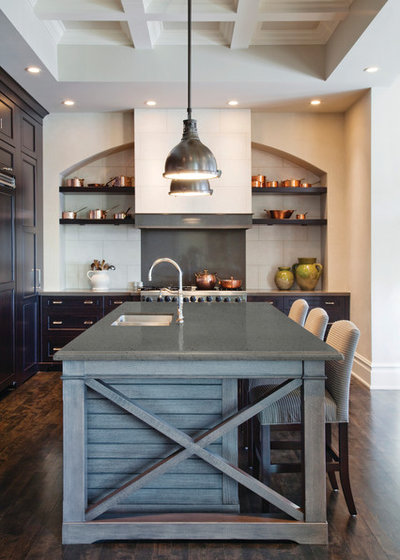
If you’ve recently shopped for new kitchen countertops, you know firsthand how many options there are today. For most people, the choices often boil down to granite or quartz. Two out of five homeowners choose one of these two surfaces, often for durability and easy cleaning. If you, too, have whittled it down to granite or quartz, here’s a quick way to learn all about their pros and cons.
GranitePro: It has longevity. Quartz may be the relatively new kid on the block, but granite has had staying power. It is time-tested and has universal appeal. Sure, certain colors may look dated in a decade, but you generally can’t go wrong with granite as a long-term investment. It almost always helps sell homes.
Pro: It’s available in wide slabs. Though granite comes in all shapes and sizes, it’s common to find slabs more than 70 inches wide.For comparison, quartz slabs are seldom larger than 65 inches wide and are most often about 56. Wide slabs are a huge benefit for kitchens with sprawling angles since they usually mean fewer seams. Some kitchens may need only one slab, which can cut costs.
Pro: It costs less. If you’ve ever purchased an exotic granite, you’re probably chuckling at this one. But it’s true that granite has more bank account-friendly options than quartz does. Entry-level granite can run from $35 to $55 per square foot installed, which is significantly less than most quartz options. This price difference really adds up with larger kitchen spaces.
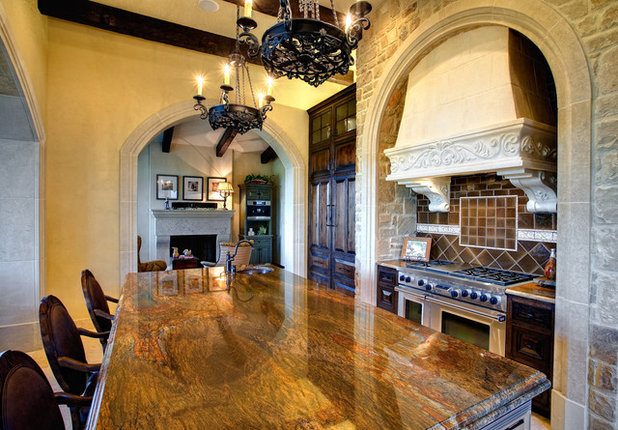
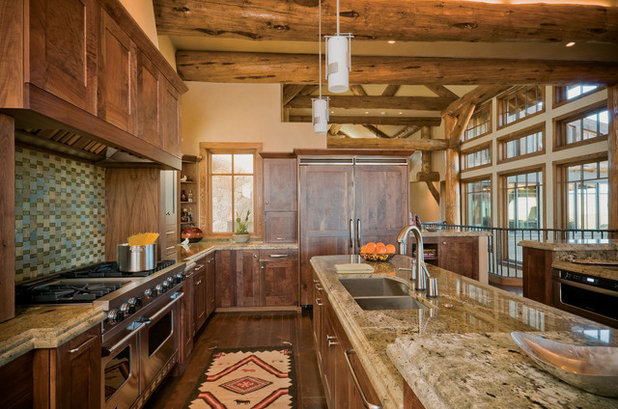
Pro: It’s a natural beauty. Jaw-dropping granite countertops don’t come from a factory. Granite is natural, and with that comes all sorts of intangibles a man-made product like quartz can never have, namely one-of-a-kind patterns and textures that you won’t see anywhere else. Every slab is unique, which really lets you personalize your kitchen.
Con: It’s porous. Like other stones, granite isn’t naturally resistant to moisture. It’s best not to let spills and water rings sit too long since they can stain your granite. An engineered product like quartz can better handle long-term exposure to moisture, and most spills won’t require immediate attention.
Con: It requires more maintenance. Granite isn’t necessarily a high-maintenance material — it just requires more care than quartz does. It’s important to be mindful of the detergents you use to clean it, as certain soaps can stain the stone. Because it’s porous, you also need to seal it regularly, a task that can become a nuisance for some homeowners. Depending on the product you use, it’s best to reseal your granite countertops every two to five years.
Con: There aren’t many “clean” styles. Granite has a lot of movement in it, from veins and swirls to spots and speckles. While this is definitely one of granite’s stronger assets, it’s also a drawback for homeowners who don’t want busy countertops. It’s almost impossible to find a clean, simple style without much patterning. If you’re looking for counters without much hoopla, quartz is likely the better option for you.
Con: It’s brittle. Granite is strong, no doubt. However, it breaks far more easily than quartz does. Breaks can occur in larger pieces with angles and turns during installation. Though most professionals offer to patch up the cracks or cover the costs of a new slab, it’s an extra headache that can set your remodeling project back several days to several weeks. Plus, no one wants to see an investment of several thousand dollars get split in half.
Quartz Pro: It’s low-maintenance. Quartz is well-equipped to handle most kinds of detergents, and all it takes is soap and water to remove most spills and stains. It doesn’t require sealing either.
Quartz does react poorly with certain chemicals, so always make sure to check your countertop manufacturer’s cleaning and maintenance guide before you use a particular product.
Pro: It’s stronger than natural stone. Quartz isn’t totally immune to scuffs and stains, but it’s about as scratch- and stain-resistant as countertops get. As an engineered product, it’s nonporous, so coffee, citrus juice, cooking oil and other common kitchen ingredients won’t stain it. The resins and polymers used during the manufacturing process form strong bonds that aren’t easy to break. You won’t have to worry as much about it cracking during installation.
Pro: It’s in high demand. Whether it’s interior design’s shift toward clean lines or a desire for less daily upkeep, quartz is hot right now. It’s a huge selling point for home buyers, so it’s worth taking a look at for house flippers and soon-to-be sellers. If the quartz’s price is right, you could net a larger return on investment in the near future.
Pro: It offers consistent, clean styles. Solid, consistent coloring is quartz’s claim to fame. This makes it a natural fit in modern and contemporary spaces that emphasize form and function instead of details. It also works well in traditional spaces that need a clean countertop style to mesh well with other detailed features, such as backsplashes, cabinetry, decor and light fixtures.
Con: It’s more expensive. If you’ve already figured out that less maintenance plus greater strength equals a higher price tag, kudos. An entry-level quartz usually costs as much as a level two granite (depending on where you’re located and where you’re buying the material from). While granite styles under $45 per square foot installed are plentiful, it’s difficult to find a quartz under $50 per square foot installed.
Con: It isn’t suitable for outdoor installations. This is one area where granite has the upper hand. While quartz is generally heat-resistant, it won’t perform well outdoors, whether it’s on an accent wall or in an uncovered outdoor kitchen. Its surface can fade and discolor after long-term exposure to sunlight. On the flip side, a natural stone like granite was born to survive sunlight and other weather elements with ease.
Con: Slabs of the same color always look the same. I’ll say it: Quartz is a tad cookie-cutter. Slab designs are predictable (which some homeowners like) and always look the same from slab to slab. In other words, you won’t ever have a truly unique countertop when it comes to quartz. If you’re wanting a one-of-a-kind work surface, it’s best to stick with granite and other types of natural stone surfaces.
Con: It isn’t the real deal. As durable as quartz is and as innovative as manufacturing processes are becoming, it won’t ever be 100 percent natural, and that’s a deal breaker for a lot of homeowners. Granite’s natural beauty, sweeping swirls and gorgeous veining aren’t easy to replicate, even with today’s advanced machinery. Read about the pros and cons — and see great examples — of these popular kitchen countertop materials.
One day you’re a full time employee and the next day you’re not. That’s what retirement can feel like but if you’re looking for more of a gradual exit or no exit at all, you might consider phased retirement.
American Has a Problem
America has a big labor problem—a massive amount of highly skilled workers are retiring or have reached retirement age and that has companies concerned. Not only are people they at retirement age, they hold all of the high-level knowledge.
Even worse, many industries are experiencing a shortage of young workers to fill the gaps.
On the other side, many of those 50 and 60-something workers don’t want to retire. A Merrill Lynch-Age Wave study revealed that 72 percent of pre-retirees over the age of 50 want to continue working in some capacity. Nearly three-quarters of Americans don’t see themselves traveling the world or working in the yard all day.
A Win-Win
Rarely does it happen but in this case, the two sides compliment each other. Employers have an opportunity to retain employees of retirement age because they want to work. That’s where phased retirement comes in. Instead of completely retiring, those workers could reduce their hours, only work certain days, move to a less stressful department, or work from home.
According to a GAO report, companies report four key benefits to phased retirement:
Retaining highly-skilled, knowledgeable workers
Training and mentoring of younger, newer employees
Ability to transition workers into retirement
Easier forecasting of future workforce needs
For the employee, they receive benefits as well:
Ability to earn income especially if retirement savings are sufficient
Remaining mentally and physically active
Able to put off collecting Social Security longer making future benefit checks larger
Are Companies on Board?
Despite employers hearing that pre-retirement employees aren’t ready to leave, and a clear benefit to the company, a surprisingly few companies embrace phased retirement. A study from the Transamerica Center for Retirement Studies (TCRS) found that 77 percent of employers believe that their employees plan to continue working after retirement but only 31 percent of those companies embrace phased retirement. And by the way, the GAO report above is titled Phased Retirement Programs, Although Uncommon, Provide Flexibility for Workers and Employers. Both studies agree that phased retirement isn’t as common as it should be.
Why So Negative?
The biggest reason seems to be the fear of lawsuits. Could a company open itself up to litigation if it gives a benefit to employees based on age? Because phased retirement often comes with an attractive benefits package, why can’t a younger employee work part time and get the perks of a “phased” employee?
There’s also the management issue. Having employees coming and going on different schedules and working only certain days makes it difficult on company managers who have to keep things operational and efficient every day. And, of course, some companies aren’t overly excited about paying for benefits like health insurance and retirement for employees who are now contributing half as much as they once did.
Finally, it’s hard to promote somebody when there’s somebody else hanging around in doing half of the job.
Tough on the Employee
Phased retirement has its benefits but also some potential headaches for the employee too. Reduced work hours will likely mean some reduction in pay and the amount of money moving into their retirement accounts. There’s also the issue of continuing to earn an income if they want to receive Social Security benefits, and the urge for an employer to continue treating the employee as a full-time employee despite their part-time status.
How to Sell It
If you’re one of the almost two-thirds of the pre-retirement workforce that wants to try phased retirement, it will take some salesmanship. First, make a strong case for how it will benefit the company. What’s the win-win for them?
Second, consider learning a new skill. Is there another job that may not require full-time hours that would only require a little additional training?
Does your company need somebody to travel to other offices and train or evaluate? Do they regularly hire outside consultants in areas where you have expertise? Think of “outside-the-box” angles like these instead of fighting for your current position, especially if what you do now is clearly a full-time effort and the company isn’t going to hire somebody to shadow you even for a short period.
You may be considering a credit union credit card as an alternative to getting a credit card from one of the major credit card issuers. Before you make the leap, it helps to be informed about the difference between credit union credit cards and credit cards from big credit card issuers
How Are Credit Union Credit Cards Different?
A credit union credit card is issued by a credit union. Credit unions are nonprofit organizations that allow members to borrow from pooled deposts at low interest rates.
Major credit card issuers, on the other hand, are for profit banks that must always keep their stockholders in mind.
Credit union credit cards often have lower interest rates, lower fees, and are more consumer-friendly than credit cards from major credit card issuers. Interest rates on credit union loans are currently capped at 18 percent. Federal law limits the interest rate for most credit union loans at 15 percent, but allows the National Credit Union Administration Board to raise the limit if it’s necessary for the safety of credit unions.
There is no federal limit on the interest rate for bank loans. Instead, interest rates are typically based on the market and competition, but there has once been a rogue credit card issuer that charged an interest rate of 79.9 percent. Of course, paying your balance in full each month allows you to avoid paying interest whether you have a credit union credit card or a credit card from a major credit card issuer.
Are Credit Union Credit Cards for Everyone?
Note that while there are some advantages to credit union credit cards, there are some downsides too. First, the general public can’t just apply for a credit union credit card as with a non-credit union credit card. You have to be a member of the credit union and membership is exclusive.
You typically need to be affiliated with a certain group or employer to join.
Because the credit union itself is a non-profit organization it doesn’t offer credit cards for a profit. Instead, members of the credit union indirectly benefit from credit union credit cards. When the credit union makes money, its able to reduce fees and offer better interest rates to members.
Credit card approval isn’t guaranteed simply because you’re a member of the credit union. The credit card issuer will still perform a credit check and review your income to determine whether you qualify for the credit card. Credit unions are often more lenient with members and may be more willing to give you a second chance if your credit card application is denied. This is a little tougher to do with a major credit card issuer.
All your credit union accounts are tied together, which means some accounts may become collateral for others. If you have a checking account and a credit card account with the same credit union, for example, your checking account balance may be at risk if you default on your credit card payments.
Otherwise, credit union credit cards are just like other credit cards. You can use them for purchases, balance transfers, and cash advances (if your card issuer allows).
You’ll have to make at least the minimum monthly payment on your balance to keep your account in good standing. Most credit unions will report your account history to the credit bureaus, which is an extra incentive for making your payments on time.
The National Association of Realtors (NAR) recently released their 2017 Profile of Home Buyers and Sellers in which they surveyed recent home buyers and sellers about their experiences. An entire section of the profile is dedicated to buyers’ experiences with their real estate agents.
If you are looking to buy in 2018, here are the top 5 benefits of using a real estate agent when buying your dream home as cited by recent buyers:
1. Helped the buyer understand the process – 60%
If you are new to the home buying process, an experienced real estate professional can explain exactly what to expect during the entire transaction so you aren’t caught off guard.
2. Pointed out unnoticed features/faults with the property – 56%
Whether it’s pointing out possible uses for an extra bedroom/office, or using their trained eye to see potentially disastrous hazards that may be hiding out of site, your agent is there to protect your interests and make sure your home buying experience is a good one.
3. Negotiated better sales contract terms – 47%
When it comes to negotiating the complex terms of your contract and coming to an agreement with the seller, it never hurts to have someone who has been there before on your side. If earlier in your search you found a couple of less than desirable features on the home you are going to purchase, your agent can make sure that contingencies are in place for you to pay the best price. Their analysis of comparable properties in the area will also help to make sure that your dream home is priced properly for the market.
4. Provided a better list of service providers – 46%
Real estate agents are titans of networking. Many have a list of preferred providers who they have worked with in the past and who they trust to work as a part of your team to make your dream come true. This can include mortgage professionals (listed as the #8 reason to use an agent at 22%), home inspectors, plumbers, contractors, painters, landscapers, home stagers, and so many more!
5. Improved the buyer’s knowledge of search areas – 44%
Local real estate professionals are often members of community organizations and are usually well versed in their area’s history. Their ties to the community make them a great resource whether you plan to relocate to a new area or across town.
Bottom Line
If your plans for 2018 include purchasing your dream home, let’s get together to discuss your options and to help you make the most powerful and confident decisions for you and your family.
With home prices on the rise and buyer demand strong, some sellers may be tempted to try and sell their homes on their own (FSBO) without using the services of a real estate professional.
Real estate agents are trained and experienced in negotiation and, in most cases, the seller is not. Sellers must realize that their ability to negotiate will determine whether or not they get the best deal for themselves and their families.
Here is a list of some of the people with whom the seller must be prepared to negotiate if they decide to FSBO:
The buyer who wants the best deal possible
The buyer’s agent who solely represents the best interest of the buyer
The buyer’s attorney (in some parts of the country)
The home inspection companies, which work for the buyer and will almost always find some problems with the house
The termite company if there are challenges
The buyer’s lender if the structure of the mortgage requires the sellers’ participation
The title company if there are challenges with certificates of occupancy (CO) or other permits
The town or municipality if you need to get the CO permits mentioned above
The buyer’s buyer in case there are challenges with the house your buyer is selling
Your bank in the case of a short sale
Bottom Line
The percentage of sellers who have hired real estate agents to sell their homes has increased steadily over the last 20 years. Let’s get together and discuss all we can do to make the process easier for you
With home prices on the rise and buyer demand strong, some sellers may be tempted to try and sell their homes on their own (FSBO) without using the services of a real estate professional.
Real estate agents are trained and experienced in negotiation and, in most cases, the seller is not. Sellers must realize that their ability to negotiate will determine whether or not they get the best deal for themselves and their families.
Here is a list of some of the people with whom the seller must be prepared to negotiate if they decide to FSBO:
The buyer who wants the best deal possible
The buyer’s agent who solely represents the best interest of the buyer
The buyer’s attorney (in some parts of the country)
The home inspection companies, which work for the buyer and will almost always find some problems with the house
The termite company if there are challenges
The buyer’s lender if the structure of the mortgage requires the sellers’ participation
The title company if there are challenges with certificates of occupancy (CO) or other permits
The town or municipality if you need to get the CO permits mentioned above
The buyer’s buyer in case there are challenges with the house your buyer is selling
Your bank in the case of a short sale
Bottom Line
The percentage of sellers who have hired real estate agents to sell their homes has increased steadily over the last 20 years. Let’s get together and discuss all we can do to make the process easier for you
The results of the 2018 Rental Affordability ReportfromATTOM show that buying a median-priced home is more affordable than renting a three-bedroom property in 54% of U.S. counties analyzed for the report.
The updated numbers show that renting a three-bedroom property in the United States requires an average of 38.8% of income.
The least affordable market for renting was Marin County, CA, just over the Golden Gate Bridge from San Francisco, where renters spend a staggering 79.5% of average wages on rent, while the most affordable market was Madison County, AL where 22.3% of average wages went to rent.
Other interesting findings in the report include:
Average rent rose faster than income in 60% of counties
Average rent rose faster than median home prices in 41% of counties
While median home prices rose faster than average rents in 58% of counties
Bottom Line
Buying a home makes sense socially and financially. If you are one of the many renters out there who would like to evaluate your ability to buy this year, let’s get together to find your dream home
Every year, the New York Federal Reserve publishes the results of their Survey of Consumer Expectations (SCE). Each survey covers a wide range of topics including inflation, labor market, household finance, credit access and housing.
One of the many questions asked in the housing section of the survey was:
Assuming you had the financial resources to do so, would you like to OWN instead of RENT your primary residence?
Over three-quarters of respondents under the age of 50 said that they would prefer to own their home, rather than rent. While only 52.6% of those over 50 would prefer to own. The full breakdown can be found in the chart below.
When renters were asked what the average probability of owning a primary residence at some point in their future was, 66.4% of those under 50 believed that they would eventually own their home, while only 23% of those over 50 did.
Bottom Line
Many had wondered if young Americans had lost their desire to own a home, but for those renting now, that dream is still alive.













:brightness(10):contrast(5):no_upscale():format(webp)/GettyImages-483598785-5a3d10fb842b170037a5f4d0.jpg)

:brightness(10):contrast(5):no_upscale():format(webp)/GettyImages-722238365-5a976d891f4e130036a8dfca.jpg)