CATCH THE WAVE

Myrtle Beach Real Estate

We Specialize in Myrtle Beach, SC Real Estate. Lots of options are waiting for you in Myrtle Beach, South Carolina and choosing the right realtors can help you in finding the perfect area and the right home for you and your family and make your dream a reality!  Let us help you in making one of the biggest, if not the biggest, decisions in your life.   

We were both born and raised along the Grand Strand and know the entire Horry County, so no matter what style of home you are looking for or what area you prefer, we can help you!  Please give us a call and let us help you make your dream a reality!  843-222-8566.

Eddie & Julie Boyd - The Boyd Team - Realtors

Myrtle Beach Real Estate - INNOVATE Real Estate


June 28, 2023

Questions to Ask Yourself Before Buying a House with a Pool

A home yard with a pool.


There's something undeniably enticing about the idea of buying a house with a pool, especially if it's near the beach. Imagine sun-soaked summer afternoons, your kids splashing around while you lounge poolside with a good book, the beach just a stone's throw away. Or picture hosting lively barbecue parties with friends, the pool, and the nearby beach serving as the perfect backdrops. More than just an entertainment hub, a pool also doubles as a fitness tool, adds aesthetic appeal, and creates a tranquil oasis for relaxation. So, whether you're daydreaming of owning a house near the beach or further inland, a pool can indeed be a dream addition to your home.

However, before being swayed by the allure, it's crucial to go beyond the glossy surface of the dream. Buying a house with a pool requires careful consideration. From ongoing maintenance and property value implications, it's a decision that needs thorough understanding and contemplation. Remember, a pool is more than just a beautiful water feature – it's a significant responsibility and a long-term investment.

7 Questions to Ask Yourself Before Buying a House with a Pool

This blog post is your roadmap to navigate the thought process before diving into buying a house with a pool – and not just any pool, but one that even includes a well. We aim to address critical questions that prospective homeowners should consider before purchasing. From grasping your motivations for wanting to have a pool with a well, understanding the obligations of maintenance, assessing the expenses involved, conducting a thorough inspection of the pool and well, to factoring in the nuances of insurance – we've got all these topics covered. The purpose is to equip you with a well-rounded understanding, arming you with the information you need to make an informed and confident decision.

Water and blue pool tiles.

Buying a house with a pool – A perfect blend of luxury and relaxation.

Why Are You Interested in Buying a House with a Pool?

Identifying your interest in purchasing a house with a pool is pivotal. The reason could be multifaceted – maybe you're drawn to the aesthetic enhancement it lends to a property, or perhaps the convenience of private aquatic workouts piques your interest. You might also be picturing it as the perfect space for hosting social gatherings or a tranquil corner for relaxation. Whatever your motivations are, acknowledging them helps align your lifestyle, expectations, and budget with your homebuying decision.

Are You Prepared for the Ongoing Maintenance?

Pool ownership demands consistent maintenance, an element often overshadowed by the excitement of a new house purchase and the associated moving process. That's why experts from müv | Trusted Florida Movers advise about settling into your new home, including what to expect when moving into a house with a pool. Consider the time, cost, and responsibilities involved – from regular cleaning and chemical balance checks to necessary repairs. If you're not a fan of DIY, you might have to allocate funds for professional pool services. They may even suggest some local maintenance services. Hence, it's essential to heed this advice and either research more about local maintenance services or educate yourself about pool self-care to ensure your pool remains a safe, clean, and inviting aspect of your new home.

What Are the Costs Associated with a Pool?

Understanding the financial commitment of a pool extends beyond the initial investment or refurbishment costs. In addition to the upfront expenses, there are ongoing costs to anticipate, such as increased utilities due to heating and filtration systems, routine cleaning services, occasional repairs, and even higher insurance premiums. Awareness of these additional costs is critical to budgeting accurately and ensuring that a pool fits into your long-term financial plan.

A house with a pool near the beach.

Embrace the serenity of beachside living with a house and pool by the shore.

Have You Considered the Safety Measures?

Safety should be a primary concern when contemplating a pool. Still, it should also be front and center when you plan a safe move, which involves certain precautions to take during relocation. Similarly, for households with children, elderly members, or non-swimmers, a pool can pose significant risks. It's essential to consider safety measures like fencing, alarms, covers, and self-closing gates. Moreover, life-saving equipment like life rings or rescue poles should be readily available. Both relocating to a new home and owning a pool require careful planning and consideration to mitigate risks. Ensure your dream pool complements a safe and secure home environment.

Does the Pool Increase or Decrease the Property Value?

The impact of a pool on property value can fluctuate based on various factors. In certain locales, a well-maintained pool may boost property value, especially in regions with warm climates where pools are in high demand. However, potential buyers might see it as a liability in other areas due to maintenance costs and safety concerns. It's essential to evaluate the local market and consult real estate experts before deciding.

Have You Inspected the Pool Thoroughly?

Like a home inspection, a thorough pool inspection is a vital part of the home-buying process, especially when considering putting a pool near a septic tank in your yard. An experienced pool inspector can identify potential problems, such as leaks, faulty equipment, or structural issues, including any that may arise from the proximity to the septic tank. These factors might cost you a lot in the long run if overlooked. A comprehensive inspection should cover pool surfaces, filtration and heating systems, safety features, and overall condition and ensure the location respects local regulations and safe distances. This guarantees you're making a well-informed buying decision.
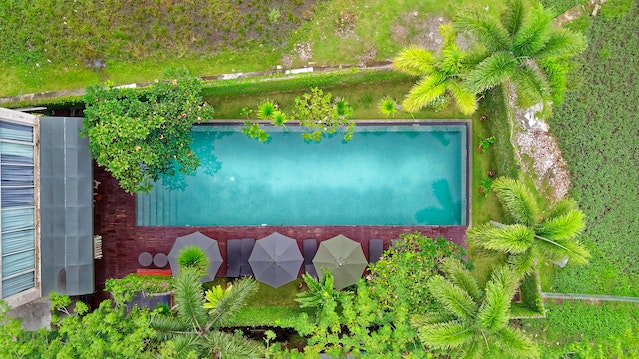
Bird’s eye photo of an outdoor pool.

A breathtaking view of an outdoor pool is your gateway to relaxation.

Have You Considered the Impact on Home Insurance?

A pool can significantly impact your home insurance, as it's often classified as an “attractive nuisance,” potentially leading to higher premiums. Insurance providers take into account the risks associated with accidental injuries or damages when calculating rates. It's advised to shop around and compare various policies. Look for a comprehensive plan that covers pool-related incidents without causing a substantial hike in your premium.

Conclusion

Buying a house with a pool is an enticing prospect but requires significant consideration. It's crucial to reflect on your motivations and understand maintenance commitments. Be aware of the associated costs, prioritize safety, conduct a thorough pool inspection, and evaluate insurance impacts. Before you dive into the alluring idea of pool ownership, ponder these questions to ensure your decision is right.


Posted in BoydTeam Blog
June 24, 2023

Best Ways to Celebrate the 4th of July in Myrtle Beach, South Carolina in 2023

 The 4th of July is one of the most popular times to visit Myrtle Beach. South Carolina is one of the most patriotic states in the entire country, which is part of what makes Myrtle Beach such a great place to experience the spirit of American freedom on Independence Day. With its stunning coastline, vibrant atmosphere, and an array of exciting events, Myrtle Beach promises an unforgettable Independence Day experience in 2023. In this blog post, we will explore the best 4th of July celebrations and activities available to you in Myrtle Beach this year.


1. Admire the Area’s Fireworks Shows


The Grand Strand loves fireworks all throughout the year. Whether you come for Memorial Day, Independence Day, or even Veteran’s Day, you’re probably going to be able to catch a fireworks show. Myrtle Beach is renowned for its breathtaking fireworks displays, and the 4th of July offers an opportunity to witness some of the most spectacular shows in the whole area.

Head to one of the many vantage points along the beach or grab a seat on the Second Avenue Pier for an unforgettable view of the fireworks lighting up the night sky. As one can expect, the fireworks are free for all to see which is one of the best parts about the night! Be sure to get there early if possible, as popular areas tend to get very packed and traffic can get pretty rough.

This year, there will be fireworks shows on July 2 and 3 after the Pelicans Game at the stadium, July 4 at 9:30pm at both East Bay Park in Georgetown and Cherry Grove Pier in North Myrtle Beach, and July 4 at 10:00pm at Second Avenue Pier, Broadway at the Beach, MarshWalk, and Barefoot Landing.


Free Fireworks Show photo and picture


2. Attend One of the Independence Day Parades


Every year there is a slew of 4th of July parades in the Grand Strand. This year, you can join the patriotic parades at three different times. There will be a 4th of July Golf Cart Parade on July 4 at 11am in Surfside Beach, a Boat Parade in Murrells Inlet at 6pm at Garden City Point, and a traditional July Fourth Parade on Pawleys Island at 10am. In addition to these events, you can join in on several beachfront celebrations, like the Surfside Beach 4th of July Celebration from 5-8pm, the Salute from the Shore at 1pm, and Georgetown’s Indigo Choral Society Concert at 6:30pm.


3. Enjoy a Family Night Out at Broadway at the Beach


Broadway at the Beach is one of the Grand Strand’s premium areas to shop and socialize. With several acres of restaurants, shops, and entertainment venues, Broadway at the Beach is a perfect place to celebrate Independence Day with your loved ones. If you decide to visit Broadway at the Beach for the 4th of July, try to make reservations in advance. The area will be absolutely packed with people who also have this idea, and there’s a good chance you’ll get stuck with long lines if you don’t plan ahead!


Free Beach Boardwalk photo and picture


4. Spend a Night at the Ballpark with the Myrtle Beach Pelicans


The Pelicans are Myrtle Beach’s beloved minor league baseball team, and a night at the ballpark is always a blast. The Pelicans work to make a family-friendly atmosphere that everyone in the family can enjoy. Tickets are always cheap, and there will be fireworks shows after each of the games on July 2 and 3.

Please note that the Pelicans will not actually be home on July 4, but rather on July 2 and July 3. So, if you want to catch the Pelicans in action, be sure to head to a game on either Sunday or Monday!


5. Independence Day 5K


For those seeking an active start to their 4th of July celebrations, reserve a spot in the Independence Day 5K run or Uncle Sam’s 1 Mile Fun Run. Lace up your running shoes and join fellow runners to make your way a few miles along the Grand Strand’s scenic coastline. The race starts at 7am on July 4th, and it is suggested that you reserve a spot in advance.

If you don’t have time to reserve a spot in advance, you can check in on the morning of the race to see if they still have any spots. Registration closes at 6am on July 4, though, so make sure you get there early if you’re hoping to snag a spot! The race departs from the Market Common.


Free Teddy Bear Teddy photo and picture


6. Eat Your Fill at a Calabash Buffet


Myrtle Beach is known nationwide for its delicious Calabash food, and the 4th of July is as good a time as any to sit down at one of the area’s top Calabash buffets. These buffets offer all you can eat Calabash food, which is a proposition you don’t want to miss out on.

If possible, try to arrive in time for a very early dinner or make a reservation in advance. There are very long waits at these restaurants all summer long, and that is even further exacerbated over the holidays or at peak dinner hours.


Thanks for reading our post on the best ways to celebrate the 4th of July in Myrtle Beach in 2023. We hope that this post is helpful for you as you figure out how to celebrate our nation’s independence in one of its most beautiful places.


If you visit Myrtle Beach or any other place in South Carolina and fall in love, we’re here to help. We at The Boyd Team are committed to helping you find the right property for your needs and dreams. Any question that you have about moving to the area and finding your dream home by the beach is our pleasure to answer. Feel free to send us an email at eddie@boydteam.com or text or call us at (843) 222-8566, and we will get back to you as soon as we can. Being true natives of the Grand Strand and Horry County and with over 25 years of experience in the local real estate market, whether buying or selling, we can help you make your dreams a reality.  


No One Knows The Grand Strand Better! Trust, Knowledge, Experience, and Professionalism You Can Count On!

Posted in BoydTeam Blog
June 19, 2023

Pros and Cons of Selling a Furnished Home

A selling agent in front of a house holding a home for sale sign.

In today's dynamic real estate market, it's crucial to understand all your selling options. One such option is selling a furnished home, where the deal includes not just the house but the furniture too. This approach can provide certain advantages but also brings some challenges. If you're a homeowner contemplating a sale, it's paramount to familiarize yourself with this selling strategy. In this detailed guide, we will dissect the pros and cons of this type of home sale, aiming to arm you with the knowledge you need to make an informed decision.

Understanding the Sale of a Furnished Home

When we talk about selling a furnished home, we're referring to a property sale where the house comes complete with its furniture. Instead of just the structure, the buyer gets a ready-to-live-in home equipped with everything from couches to beds to kitchen appliances. This might sound like an attractive proposition, but the decision to sell a furnished home shouldn't be taken lightly. It requires a clear understanding of what the process entails.

Pros of Selling a Furnished Home

Immediate Move-in Ready

The first significant advantage of selling a home like this lies in its immediate move-in readiness. Buyers can easily envision their lives within the house, eliminating the daunting task of sourcing, purchasing, and moving furniture. This attribute especially appeals to those seeking a hassle-free transition into their new abode. It might be someone relocating for work on a tight schedule, a first-time buyer without an existing furniture collection, or even an investor hunting for a ready-for-rent property. Thus, a furnished home can become an attractive purchase proposition for a segment of buyers valuing convenience and time efficiency.

Attracting Specific Markets

Another compelling reason to consider selling your home furnished revolves around its allure for specific market segments. For instance, real estate investors looking to rent or resell might find a furnished property particularly appealing, as it simplifies their process and accelerates profitability. Similarly, vacation home buyers often prefer furnished houses, offering them a ready-to-use retreat. International buyers, too, might favor this option as it spares them the trouble of furniture shopping in a new country. By targeting these specific audiences, selling this way can open up unique opportunities. It can even potentially increase the buyer pool.

Potential for Higher Sales

As a homeowner, one of your main goals is likely to maximize the profit from your sale. Herein lies another potential benefit of selling a furnished home - the possibility of a higher selling price. Prospective buyers might see added value in a home that's already furnished, particularly if your furniture is high-quality, well-maintained, and tastefully arranged. If presented right, your furnishings could justify a higher asking price and potentially even start a bidding war on your house. It's about offering a complete package that saves buyers time, energy, and the potential cost of furnishing a home themselves.

Reduced Stress

One of the often underestimated advantages of doing this is the reduced stress it brings to the seller. Moving can be arduous, especially when it involves packing, transporting, and arranging large and bulky furniture items. However, you alleviate the burden of managing these logistical challenges by selling your home with the furniture included. You won't have to worry about dismantling, moving, or storing heavy pieces. Instead, you can focus on other aspects of the selling process, such as preparing the property for showings, coordinating with real estate agents, and negotiating offers. This process can provide a smoother and less stressful transition for sellers. Of course, if you need to keep some things, experts from NYC Mini Storage recommend a storage unit for your needs.

Cons of Selling a Home This Way

Limited Buyer Pool

It's important to consider the potential drawback of a limited buyer pool. Some buyers prefer the freedom of starting with a blank canvas, where they can infuse their personal style and furniture choices into the space. By selling a home furnished, you may inadvertently limit your market to those who align with your taste in furniture and décor. This narrower audience can make it more challenging to attract potential buyers. You may end up having to utilize strategic marketing efforts to reach the right individuals who appreciate the included furnishings.

Lower Profit Risks

One of the risks associated with this kind of sale is the potential for lower profit. While including furniture may enhance your property's appeal, it's important to consider the financial aspect carefully. The furniture cost included in the sale may not always be fully recouped in the final selling price. Buyers may negotiate down from the asking price, considering the furniture's perceived value.

Luckily, this is avoidable. You must conduct thorough research and consult with a real estate professional. This way, you’ll accurately assess the market and set a realistic price for both the property and the furniture.

Wear and Tear

Another aspect to consider when selling a furnished home is the potential impact of wear and tear on the sale. Furniture, especially if used for a considerable period, may show signs of aging or damage. Some of the main things buyers don’t want to see are scratches, stains, or faded upholstery. These issues can significantly detract from the overall appeal of your home. Buyers may perceive these flaws as a reflection of the home's overall condition, leading to lower offers or hesitation in purchasing. It's crucial to assess the condition of your furniture objectively and, if necessary, invest in repairs or replacements to ensure a positive impression on potential buyers.

Legal Considerations

Transferring ownership of both the property and the furniture requires proper documentation and adherence to applicable laws. It's advisable to consult with a professional real estate agent or an attorney who specializes in real estate transactions. They can guide you through the necessary steps, ensure that all legal requirements are met, and help you navigate any potential challenges or complexities that may arise. Additionally, they can provide valuable insights into insurance considerations, warranties, and other legal aspects that pertain to this process.

Tips for This Type of Home Sale

If you've decided to go ahead with a furnished home sale, here are some essential tips to maximize your chances of success:

       Highlight key furniture pieces that showcase your home's unique character and appeal. This can help potential buyers envision themselves living in the space.

       Develop a sound pricing strategy that considers both the property's value and the included furnishings. Consider professional staging to create an inviting atmosphere that appeals to many buyers.

       Document everything included in the sale, providing transparency and clarity to potential buyers.

Following these tips can significantly enhance the marketability of your furnished home.

No Need to Sell Everything

When moving, deciding what to do with your furniture can be a headache. You may not want to bring everything to your new home. However, selling everything you own might not sound great either. That's where storage units come in handy. They offer space for extra pieces and a secure place to keep your belongings during this transitional period.

Wrapping up

Selling a furnished home comes with its pros and cons. The right choice depends on your specific situation, and you should always consult a professional real estate agent before deciding. By considering all the factors and taking the right steps, you can make the process of selling your home a fruitful and less stressful experience.


Posted in BoydTeam Blog
June 17, 2023

The Healing Power of Coastal Living: Health Benefits for Young Families and Retirees

Living near the beach is a dream for many people. The idea of soaking up the sounds of ocean waves and laying in the sun is enough for many people to feel truly happy. While the idea of living at the beach sounds very enticing, there are actual health benefits linked to living along the coast!

Free Beach Birds photo and picture

Moving to the beach offers a wide range of health benefits that can greatly enhance the well-being of anyone. While thousands of people move to the coast each year, the fastest-growing demographics by the beach tend to be young families and retirees. In this blog post, we will look into the many ways in which living near the beach can positively impact your physical and mental health. Whether you're considering a move or already reside near the coast, you'll discover why coastal living is more than just a picturesque setting – it's a gateway to improved health and happiness.


Physical Health Benefits of Living Near the Beach


Increased Activity Levels


Living near the beach provides a wealth of opportunities to stay healthy. From taking a dip in the ocean to walking on the beach, the coastal setting has a tendency to make people want to be more active. If you don’t love the sand, many beach areas offer a slew of paved bike and running paths just off of the beach that offer even more ways to get your heart rate up.


More Sunlight and Vitamin D = Healthier Body


On top of the increased activity levels, the coastal weather can greatly improve your physical health, too. Sunlight is crucial for your body to absorb vitamin D, for example, and living near the coast ensures that your body soaks up plenty of sunlight through each season of the year. Sufficient vitamin D is necessary to maintain bone and teeth health, among many other bodily functions.

While these health benefits are scientifically proven, the weather brings a few disadvantages, too. Sun is crucial for your body, but too much sun is terrible for your body. When living near the beach, it is crucial that you avoid overexposure to the sun and wear sunscreen with an adequate SPF.


Free Beach Sun photo and picture


Pure Air Refreshes your Lungs


While saltwater might burn your eyes, the salty sea breeze is actually great for your respiratory and immune systems. The sea breeze offers extra protection from getting sick during flu and cold seasons. Any boost to respiratory health ought to be welcome, especially when it requires no additional effort on your part!

In addition, the geographic location and wind patterns of the coast usually mean the pollen levels are much lower than they are inland. This is a major advantage if you have pollen allergies, which are estimated to impact over 20% of Americans.


Mental Health Benefits of Living Along the Coast


The Beach Reduces Stress


For decades, people have talked about the calming effects of the ocean. The soothing effect of ocean waves is hard to overstate. There’s a reason so many sleep machines make their money by imitating the sounds of the ocean!

Beyond just the sounds of the waves, the beach is the perfect setting for relaxation. If you are able to find a quiet stretch of beach, you can spend a full day reading, relaxing, and soaking up the sun all while listening to the waves crash into the sand.

All of these effects are shown to lower levels of cortisol in the body, which is the main stress hormone. Stress is a physical response in the body, and eliminating stress can help your body to feel at ease, get better sleep, and more.


The Beach Is Shown to Boost Your Mood


There have been many studies showing the positive impacts that the beach can have on your mood. Sunlight is known to cause additional levels of serotonin in the body, which is the main hormone that makes us feel happy. Additionally, the color blue is linked with high levels of calmness, which is part of why people find the beach to be so peaceful. All of this together can cause higher overall satisfaction with life and happiness.


Free Woman Girl photo and picture


The Beach Is Used as a Natural Therapy for Mental Health Disorders


All of the points above about physical and mental health were recognized centuries ago by scientists, and long stays in the beach have actually become a popular natural therapy for depression and anxiety. Both of these mental conditions can be helped by spending time soaking up the ocean waves and breathing in the sea breeze. The beach is also an especially effective treatment for Seasonal Affective Disorder since the weather is often consistent throughout the year with very little seasonal change.

If you move to the beach, you get to experience these calming effects day in and day out with no need to find an escape!


Benefits for Young Families and Retirees


Young Families Thrive by the Beach


Living by the beach is great for families due to many reasons. Aside from encouraging a healthy lifestyle, living by the beach tends to encourage family bonding and entrepreneurial thinking. Both of these things are incredibly valuable for children!

There is very little more important than family. Emphasizing family bonding is critical to raising healthy children. Living near the beach provides a family with many readymade ways to get out and enjoy each other’s company.

Whether it is building sandcastles or playing on the beach, getting together as a family is easy and enjoyable on the coast.

Beyond just that, living near the beach often helps to instill an entrepreneurial spirit in children. This is because many beach towns and cities are ripe with opportunities to start or work with a small business. Whether it is selling snacks on the beach or working at the local surf shop, youth in coastal towns get lots of exposure to the commercial world from a young age.


Free Beach People photo and picture


Benefits for Retirees


There’s a plethora of reasons why folks choose to retire by the beach. It’s no secret that states with large coastlines tend to receive disproportionately high amounts of retirees! The active lifestyle, robust retiree communities, and stellar healthcare are some of the main reasons why.

Getting out and about is one of the best ways to stay healthy while aging. As we mentioned above, getting outside and getting your heart rate up is easy to do near the coast! Whether you choose to ride a bike, go for walks, or swim in the ocean, you will have no shortage of exercise options living near the beach.

It's also easy to stay in shape when you live among other retirees and near robust healthcare systems. In coastal towns, it is incredibly easy to make friends as a senior citizen, and the stellar healthcare offers a great safety net if you ever need it.


Living near the beach goes beyond the aesthetic appeal; it brings a multitude of health benefits that can positively transform the lives of both young families and retirees. On top of that, the beach offers countless opportunities for young families in the way of bonding, recreation, and education. Meanwhile, retirees can relish an active lifestyle, access to healthcare services, and a close-knit coastal community. Whether you're considering a move or already enjoy coastal living, there’s no denying the advantages that living by the beach offers!


If you visit Myrtle Beach or any other place in South Carolina and fall in love, we’re here to help. We at The Boyd Team are committed to helping you find the right property for your needs and dreams. Any question that you have about moving to the area and finding your dream home by the beach is our pleasure to answer. Feel free to send us an email at eddie@boydteam.com or text or call us at (843) 222-8566, and we will get back to you as soon as we can. Being true natives of the Grand Strand and Horry County and with over 25 years of experience in the local real estate market, whether buying or selling, we can help you make your dreams a reality.  


No One Knows The Grand Strand Better! Trust, Knowledge, Experience, and Professionalism You Can Count On!


 Written by Greg

Posted in BoydTeam Blog
June 10, 2023

The Top 7 Advantages of Living in Myrtle Beach, South Carolina

Myrtle Beach, South Carolina, is more than just a popular vacation destination; it's a place where people come to live. With its breathtaking beaches, vibrant community, and diverse range of local activities, Myrtle Beach offers a unique and fulfilling lifestyle that residents have come to love. In this post, we will explore the numerous advantages of living in Myrtle Beach, highlighting why it might be the perfect place for you to call home.


1. Pristine Beaches and Outdoor Recreation


One of the greatest advantages of living in Myrtle Beach is having access to its world-class beaches. The golden sands, sparkling waters, and gentle ocean breezes provide the perfect backdrop for relaxation and recreation. Residents can enjoy sunbathing, swimming, surfing, fishing, and boating, among many other water activities. Myrtle Beach also boasts an array of parks, nature trails, and golf courses, offering ample opportunities for outdoor enthusiasts to explore and stay active. This is what earned it the title “Golf Capital of the World!”

Free Myrtle Beach Sunrise photo and picture

2. Its Southern Hospitality


One of the defining characteristics of Myrtle Beach is its warm and welcoming community. Southern hospitality is prevalent, with residents displaying genuine friendliness and a strong sense of community. Newcomers are embraced and quickly made to feel at home. The close-knit community spirit is evident in local events, volunteer opportunities, and support networks, fostering a sense of belonging.


3. The Grand Strand’s Mild Climate


Myrtle Beach enjoys a mild and pleasant climate throughout the year, making it an ideal location for those seeking a comfortable and enjoyable place to live. The region experiences mild winters with average temperatures in the 50s, and warm summers with temperatures averaging in the 80s. This temperate climate allows locals to partake in outdoor activities year-round and enjoy the beauty of their coastal surroundings.


4. Affordable Cost of Living


One of the significant advantages of moving to Myrtle Beach is its affordable cost of living. The housing market offers a range of options, from beachfront condos to family homes, at relatively affordable prices compared to other coastal cities. Additionally, utilities, groceries, and healthcare expenses are generally reasonable. The lower cost of living allows residents to enjoy a high quality of life while keeping their expenses in check.


5. Easy Access to Major Cities


One of the significant advantages of living in Myrtle Beach is its easy access to major cities. Situated on the southeastern coast of the United States, Myrtle Beach is conveniently located within driving distance of several prominent cities. Charlotte, North Carolina, is just a three-hour drive away, while Charleston, South Carolina, and Wilmington, North Carolina, can be reached within two hours. This proximity to major urban centers allows residents of Myrtle Beach to enjoy the best of both worlds, with access to city amenities while residing in a more relaxed coastal environment.

Free Dock Ocean photo and picture

6. The Family-Friendly Atmosphere


Myrtle Beach offers a thriving community and a warm, family-friendly atmosphere. The city hosts a variety of events, festivals, and cultural activities that bring people together, fostering a sense of camaraderie and belonging. The community is known for its hospitality, making newcomers feel welcome and allowing families to establish deep roots. Excellent schools, safe neighborhoods, and abundant recreational opportunities make Myrtle Beach an appealing destination for families looking to settle down.


7. Diverse Entertainment and Dining Options


Living in Myrtle Beach means being surrounded by a wealth of entertainment and dining options. The city is renowned for its vibrant nightlife, live music venues, theaters, and comedy clubs, ensuring there's always something exciting happening. From waterfront restaurants offering fresh seafood to international cuisine, Myrtle Beach caters to all tastes. Whether you're seeking a casual beachside café or an upscale dining experience, the city has a wide array of choices to satisfy any palate.


8. Robust Economic Opportunities


Myrtle Beach is not only a great place to live but also offers economic opportunities for residents. The city's strong tourism industry provides a steady stream of jobs in various sectors such as hospitality, entertainment, and retail. In recent years, Myrtle Beach has also seen growth in industries like healthcare, education, and technology, providing diverse career options. Additionally, the cost of living in Myrtle Beach is relatively affordable compared to other coastal cities, making it an attractive destination for individuals and families seeking a high quality of life.


9. It Is a Retirement Haven


With its desirable climate, recreational opportunities, and welcoming community, Myrtle Beach has become a popular retirement destination. The city is home to numerous retirement communities and offers an active lifestyle for retirees, with amenities such as golf courses, fitness centers, and social clubs. Moreover, the affordable cost of living, favorable tax rates, and access to quality healthcare contribute to making Myrtle Beach an ideal place for retirees to enjoy their golden years.

Free Beach Sea photo and picture


10. It Is Loaded with Cultural and Historical Significance


Myrtle Beach has a rich cultural and historical heritage that adds depth and character to the city. From the iconic Myrtle Beach Boardwalk to the Myrtle Beach State Park, there are several landmarks and attractions that showcase the area's history and natural beauty. Additionally, the nearby Brookgreen Gardens, a National Historic Landmark, offers a remarkable display of sculpture and stunning gardens, reflecting the region's artistic side. Exploring the local history and immersing oneself in cultural experiences contribute to a fulfilling life in Myrtle Beach.


From the stunning beaches and abundant outdoor activities to the welcoming community and diverse amenities, Myrtle Beach offers a high quality of life and a range of advantages for its residents. Whether you're seeking relaxation, entertainment, economic opportunities, or a place to retire, Myrtle Beach stands out as a coastal paradise that has it all. Make the decision to call Myrtle Beach home, and experience the many joys this remarkable city has to offer.


If you visit Myrtle Beach or any other place in South Carolina and fall in love, we’re here to help. We at The Boyd Team are committed to helping you find the right property for your needs and dreams. Any question that you have about moving to the area and finding your dream home by the beach is our pleasure to answer. Feel free to send us an email at eddie@boydteam.com or text or call us at (843) 222-8566, and we will get back to you as soon as we can. Being true natives of the Grand Strand and Horry County and with over 25 years of experience in the local real estate market, whether buying or selling, we can help you make your dreams a reality.  


No One Knows The Grand Strand Better! Trust, Knowledge, Experience, and Professionalism You Can Count On!


Posted in BoydTeam Blog
June 9, 2023

6 Things You Need to Know About Waterfront Home Maintenance


An interior of a house by the water

Owning a waterfront home is a dream for many, offering breathtaking views and a tranquil lifestyle. However, along with the undeniable allure of living by the water comes the responsibility of specific maintenance rules. Unlike regular homes, waterfront properties face unique challenges and considerations that require special attention. From the corrosive effects of saltwater to the threat of erosion, understanding how to properly care for your home is crucial to its longevity and value. This article will explore six essential things you need to know about waterfront home maintenance. Whether you already own a waterfront property or are considering purchasing one, this comprehensive guide will provide you with the knowledge and expert tips to ensure your slice of waterfront paradise remains in pristine condition. Get ready to dive into the world of waterfront homes!

Understanding the Impact of Waterfront Environment on Home Maintenance

Living in a waterfront home presents a unique set of challenges regarding maintenance. The proximity to water significantly impacts the maintenance needs of these properties. One of the primary concerns is corrosion, as saltwater or freshwater can accelerate the deterioration of metal components such as railings, fixtures, and outdoor furniture. Additionally, moisture damage becomes a persistent threat, with water seeping into cracks, causing rot and decay. Another issue is the increased risk of mold growth due to high humidity levels. To mitigate these risks, regular inspections are essential, enabling early detection and prompt repairs. Implementing preventive measures like sealing surfaces, applying protective coatings, and utilizing proper ventilation systems can help safeguard your waterfront home against these environmental challenges.

A woman cleaning a window

Maintenance of windows and roofs is very important.

Maintaining the Exterior of Your Waterfront Home

Maintaining the exterior of your waterfront home is crucial for its longevity and visual appeal. Regular inspection and maintenance of key components such as siding, windows, and roofs are essential in ensuring their durability in the face of saltwater or freshwater exposure. The corrosive nature of water can deteriorate these structures over time. To protect against this, it's important to clean surfaces regularly, removing salt residue and debris. Sealing exterior surfaces with appropriate coatings can provide an additional layer of protection. Investing in quality materials and applying proper waterproofing techniques will help safeguard your home's exterior from the harsh effects of its environment, ensuring it remains a beautiful and well-protected retreat for years to come. If you happen to be moving from Texas to South Carolina, we suggest hiring movers, as pros can arrange the transfer of the materials for waterfront exterior maintenance.

Large blue waves

Waves and tides can damage your property.

Protecting Your Waterfront Property Against Erosion

Protecting your waterfront property against erosion is vital to safeguarding its stability and value. Erosion, the gradual wearing away of land by natural forces, poses a significant threat to waterfront properties. The continuous action of waves, tides, and currents can erode the shoreline, leading to property loss and damage. Fortunately, there are effective erosion control methods available. Seawalls, constructed along the shoreline, act as barriers to dissipate wave energy and prevent land loss. Riprap, consisting of large stones or concrete blocks, can be placed strategically to absorb wave impact and reduce erosion. Vegetation, such as dune grass or native plants, helps stabilize the soil and anchor it in place. Regular maintenance and monitoring of erosion control measures, including inspecting for damage, replenishing lost materials, and reinforcing weak areas, are crucial for ensuring their long-term effectiveness. By implementing these measures, you can maintain your waterfront’s natural beauty for years to come.

Waterfront Home Maintenance: Caring for Your Waterfront Landscaping

Caring for your waterfront landscaping is essential for enhancing the beauty and functionality of your property. A well-maintained landscape not only adds curb appeal but also serves as a buffer between your home and the water, protecting against erosion and providing privacy. However, waterfront landscapes come with their own set of challenges. The proximity to saltwater requires selecting plants with high saltwater tolerance to withstand harsh conditions. Additionally, soil erosion can be a concern, necessitating soil stabilization methods such as retaining walls or erosion control blankets. Professionals at State to State Move say that the reason some of their clients had to move was the damage erosion created due to their lack of landscaping maintenance. When selecting plants, opt for salt-tolerant varieties like beach grass or seaside goldenrod. Implement efficient irrigation techniques such as drip irrigation to minimize water waste. Regularly monitor and maintain your waterfront landscape by removing debris, controlling weeds, and replenishing mulch to promote healthy growth and preservation of your stunning waterfront oasis. All of this can seem daunting if you move to a new house.

Maintaining Your Waterfront Dock or Pier

Regular inspection and waterfront home maintenance are key to identifying and addressing common issues that can arise. Wood rot, caused by constant exposure to moisture, is a significant concern, and it's crucial to inspect the structural elements for any signs of decay. Additionally, corrosion of metal components due to saltwater exposure is a potential threat. Regular cleaning of the dock or pier using gentle detergents and freshwater rinsing can help prevent salt buildup and corrosion. Sealing the wood surfaces with appropriate coatings will provide added protection. Promptly repair any damaged or weakened sections, reinforcing the structural integrity. By implementing these guidelines and conducting regular maintenance, you can enjoy a safe and well-preserved waterfront dock or pier for years to come.

 paper with insurance written on it

You need to understand insurance for successful waterfront home maintenance.

Understanding Insurance and Permits for Waterfront Homes

Understanding insurance and permits is crucial for waterfront homeowners to protect their property and comply with legal requirements. Adequate insurance coverage is essential for waterfront properties due to the increased risk of natural hazards like flooding. Flood insurance, in particular, is vital to mitigate potential financial losses. Liability coverage is also important as waterfront properties often attract visitors and guests. Review and understand the terms of your insurance policies to ensure comprehensive protection.

Additionally, waterfront homeowners may need to obtain permits for certain features, such as docks or piers. Dock permits ensure compliance with safety and environmental regulations, while shoreline management regulations govern activities near the water's edge. Familiarizing yourself with the specific permitting requirements in your area is essential to avoid penalties and legal issues. By proactively addressing insurance and permit considerations, you can protect your home and enjoy peace of mind.

Conclusion

In conclusion, proactive waterfront home maintenance is vital for long-term enjoyment and value preservation. We suggest implementing the suggested tips and seeking professional assistance to ensure your waterfront home remains top-notch.

Posted in BoydTeam Blog
June 3, 2023

10 Things You Should Keep an Eye Out for While Shopping for a Home

There’s nothing like buying a home. From the tours and open houses to the paperwork on the back end, there are so many pieces that go into the homebuying equation and it is easy to miss a step. With so many things going on, it is incredibly easy to miss a step or overlook a glaring red flag.

While your mind thinks about mortgage documents, school districts, and budgeting, it is easy to overlook the details of a home itself. There are some things that look great in pictures, but in reality, are far from it. This post will highlight the 10 things you should keep an eye out for while shopping for a home.


1.     Cracks in the Foundation


The foundation is often considered the most important part of a home. It is what bears all the weight of the house, and it alone keeps all of the walls, doors, floors, and ceilings square and in line with each other. A cracked or damaged foundation can mean a sloping or lopsided house.

The big problem with a cracked foundation is that it can be very costly and difficult to repair. Foundational repairs can cost thousands of dollars and are major undertakings.

As a prospective homebuyer, the last thing you want to do is buy a home that will immediately need thousands of dollars of work. But on top of that, homes with foundational damage usually also have irreparable structural damage, as the house loses its shape and squareness as the foundation beneath it cracks.

Finding cracks in the foundation can be very difficult if the house doesn’t have a basement, or if the basement is finished. In these cases, only a structural engineer can reliably tell whether or not the foundation is sound. However, if there is an unfinished basement with a concrete slab floor, you can usually tell pretty easily whether or not the foundation is healthy.


Free Shutters Architecture photo and picture


2.     Odors and Other Scents


Nobody wants to live in a home that emits a foul odor. Foul odors can be incredibly difficult to get rid of, and their causes are often hard to identify. If you want into a home filled with bad smells, you’ll likely feel like walking right back out the door.

While this is true, there are other things to be looking out for. If the windows are open but it is cold or rainy outside, this is likely a sign that the owner is trying to air the house out. Similarly, if there are artificial air fresheners strewn throughout the house, there is a good chance that the owner is trying to cover something up. In either of these cases, it is important to ask why.


3.     Fresh Paint on Just a Few Walls

While fresh paint may be a great thing, fresh paint only on select walls may tell an entirely different story. When people repaint their homes, they usually do all of the walls, or at least all of the walls in a given room. If you see that one or two walls in a room are freshly painted, but the others aren’t, it is important to ask why.

Often, walls are repainted to cover up structural or water damage that may have occurred. All damage is important to know about as a prospective homebuyer, and identifying differences in paint color is a great way to figure out what the seller might be hiding.


Free House Structure photo and picture


4.     Bugs and Other Pest Damage


Bugs and pests are everywhere, and most homes will have to deal with them at some point. However, if there are outward signs that a home has had a pest problem, or if there are clearly pests currently living in the home, these may be red flags.

Pest infestations can cause deep-rooted damage in a home, and much of it is invisible to the naked eye. When you see outward signs of an infestation, that likely means it was so bad that the damage couldn’t even be hidden. Most pests live beneath the floorboards and in the walls, and the damage is usually invisible. If you’re seeing bite marks on the walls, droppings, or other kinds of insect damage, beware.


5.     Off-Limits Areas


When you buy a house, the entire thing becomes your property. Therefore, when you are touring a house, you should have the right to see the entire thing! If a seller labels certain rooms as off-limits, it is important to ask why and to make sure that you see them before agreeing to any terms. While they might label rooms as off-limits simply because they are currently filled with the owner’s things or equipment, you should still make sure that they are in good condition before you agree to purchase a home.

If the owner doesn’t want you to see certain spaces, like the attic, basement, or cellar, this is probably a red flag. You never want to discover the house’s dirty secrets after you buy it!


6.     Amateur-Level Repairs or Renovations


Homeowners often look to save money by doing repairs on their own. This can really be a cost-effective way to repair or renovate! However, when amateurs do work, it is usually noticeable and can deteriorate the value of a home.

If you are touring a home and see gaps in the molding, unlevel cabinets, or poorly installed flooring, it is important to ask the seller why these things are occurring. If the floors were a DIY project, for example, you will likely have to replace them at some point on your own. This can get costly, especially if the previous owners had a real tendency to do things themselves.


7.     Mold and Mildew


Mold and mildew can be dangerous and hard to maintain. Mold is especially dangerous for immunocompromised people and children, and it can be very hard to get a handle on. If you see mold, or if you smell mold, you should absolutely ask about it.

Mold isn’t the worst problem in the world, but it is a serious one. While the presence of mold is a danger, it also means that there is likely water damage, a leak, or another air moisture problem within the house. These are all things you want to fix to make sure the problem is truly resolved.


8.     Doors that Don’t Close Properly


You should take note of the way the doors in a house close. If you have difficulty closing doors, or if they look a little crooked compared to the door frame, this is a sign that the house has shifted. All houses shift over time as they set into the ground around them, but foundational damage can cause the house to really sit lopsided. If there are doors that won’t close, or if the doors appear to close but do not latch shut, there may be a foundational issue that you should look into.


9.     Overall Negative Impression of the Neighborhood


When you buy a house, you’re buying its neighborhood and community, too. You want to make sure that the place you live is truly pleasant, and is truly somewhere you want to spend a lot of your time. If your impression of the neighborhood is bad, that probably means the neighborhood is bad. While it is never great to judge a book by its cover, curb appeal and the vibes of a neighborhood generally tell the story pretty well. If you are skeptical of a neighborhood based on its appearance, there’s a good chance that your gut feeling is accurate.

 Free House Home photo and picture

10.  Long Time on Market


Houses tend to sell pretty quickly in most market conditions. As long as the economy isn’t experiencing a strong buyer’s market, a house shouldn’t sit for sale for 6+ months. If a house has been for sale for over half a year and the price keeps getting reduced, there is likely more to the story. While the slashes in price may be advantageous to some buyers, this usually indicates that there is a bigger piece of the puzzle that is keeping buyers from buying the home. This is absolutely something to ask about when touring it.


Thanks for reading our post on the 10 things you should keep an eye out for while shopping for a home. We hope that this post is helpful for you as you navigate the home buying process. There is no such thing as a bad question or even too many questions. It is better to know the truth before you close on a house than to find out afterward that the foundation is cracked!


If you visit Myrtle Beach or any other place in South Carolina and fall in love, we’re here to help. We at The Boyd Team are committed to helping you find the right property for your needs and dreams. Any question that you have about moving to the area and finding your dream home by the beach is our pleasure to answer. Feel free to send us an email at eddie@boydteam.com or text or call us at (843) 222-8566, and we will get back to you as soon as we can. Being true natives of the Grand Strand and Horry County and with over 25 years of experience in the local real estate market, whether buying or selling, we can help you make your dreams a reality.  


No One Knows The Grand Strand Better! Trust, Knowledge, Experience, and Professionalism You Can Count On!


Posted in BoydTeam Blog
May 27, 2023

Can You Have a Pool with a Well? [You'd Be Surprised]

Having a pool is the dream of many homeowners. Some folks plan on installing one right when they buy a house, and others include it in their long-term plan before moving in. One complication that many prospective homebuyers face is whether or not you can have a pool in the same yard as a well. 

There is a lot to unpack in this question. If you're considering putting a pool into a yard that also has a well, or if you're considering filling a pool with well water, this post will contain everything you need to know. Whether you are a prospective homebuyer or already own your home, the Boyd Team has you covered.


Free Swimming Pool Pool photo and picture


Complications of Building a Pool Near a Well

Wells utilize a complex structure of tunnels and pumps underground, and it is true that building an in-ground pool can put this system at risk. The gallons of water that fill a pool are extremely heavy, and it is important that a pool sits on firm, full ground. Any pool installation company that you work with will likely be able to find the right spot in your yard to put a pool.

While the actual soil of your yard can dictate where your pool should go, the local government also has a say. Many local governments impose restrictions on where pools can go, what types of pools can be installed, and more. While it is your own private property, many governments still have a say in what you put on it!

Regulations About Building a Pool Near a Well

Since building a pool near your well can put it at risk, most counties in the United States actually regulate the distance between your pool and your well. The minimum distance will vary greatly depending on the county. As a general rule of thumb, you can expect the county to say the pool needs to be at least ten or fifteen feet from the well, but often much further.

We wrote about this in our post about putting a pool near a septic tank, as county regulations tend to be very similar on both issues.


In-Ground Pools vs. Above-Ground Pools with a Well

Logistically, there is a bit of a difference between in-ground and above-ground pools when you have a well. Above-ground pools clearly need to abide by all local regulations, but at least they do not require much digging, if any. In-ground pools, meanwhile, require full excavation that can interfere with your well. 

Another huge difference is that in-ground pools are permanent, while above-ground pools can be moved. If there is a well-related local regulation that you are unaware of when you purchase your pool, it is a hard thing to remedy if your pool is dug into the ground.


Free Summer Swim photo and picture


Can You Have a Hot Tub with a Well?

Since you can have a pool with a well, you can absolutely have a hot tub with a well. As long as you follow the local regulations, having a hot tub is fairly low maintenance and causes little to no disruption to your well. Since hot tubs are much smaller than pools in most cases, you may even be able to fill one using your well without any issues.

While the amount of water may not be an issue, the quality of water might. Be sure to read the section on filling a pool with well water to learn about potential water quality issues that might arise by using well water to fill a pool or hot tub.


​Can You Fill a Pool with Well Water

If you have a well, it makes sense to want to use it to fill your pool. After all, it would be much cheaper than bringing in an external water source to do it with city water! Pool owners can absolutely use well water to fill up their pools, but there are a few major complications that should be considered.


Free Pool Cleaning Machine photo and picture


Pools Require a Lot of Water

The first major complication to think about is that pools require enormous amounts of water. Most backyard wells do not contain enough water to fill a large pool. If you install an average-sized pool in your backyard, you will likely need thousands of gallons of water to fill it. Thousands!

An average 12'x24'x4x pool requires over 8,000 gallons of water to fill. Depending on your well's water level, that is simply an impossible amount to use. This factor alone is a major reason why people with wells call third-party vendors to fill up their pools.

It is never a good idea to run your well dry. There is only so much water in your well, and running it dry means having very little water left to drink, bathe with, and cook with. You should check your well's water level before you try to fill your pool to make sure this doesn't happen, as running a well dry can also damage its pump and other structural components.


​Well Water Is High in Minerals (Not a Good Thing)

The biggest argument against using well water to fill your pool is water quality. Murky water is often a product of high metal content, which is one of the most common problems with well water. This cloudy water, or hard water as it can be called, is bad for your skin, body, and pool itself.

If you're considering using well water to fill your pool, it's a good idea to use test strips to test the water's calcium hardness. This is the easiest way to know whether or not your well water is suitable for a swimming pool and should always be the first step you take. A healthy swimming pool is one with clean, clear water, and this can't be the case when you use hard water supplies.

If you are adamant about using well water to fill your pool, you might want to look into a water treatment system. Water softeners work to reduce high amounts of minerals in your water supply. Water softeners are especially important for people with private wells, as most municipal water is already treated before it is funneled out to homes.


Using Your Well to Fill Your Pool Will Take a Long Time

We already mentioned the amount of water needed to fill a pool as a major barrier. However, another thing to consider is how long it takes to pump that much water, even if you have it! Unless your garden hose has an incredibly high flow rate, filling your pool will take hours or even days. Obviously, the size of your pool greatly impacts the amount of time it will take to fill, but if your hose has a low flow rate, this process could take an eternity.


Free Water Well Tiled Roof photo and picture

Your Well Pump May not be Strong Enough to Fill a Large Pool

Even if you have enough water in your well and enough time to wait, your well still might not be capable of filling an entire pool. Running your well's pump constantly for so many hours can cause a lot of damage to it. If the pump sustains damage, your well's flow rate will likely deteriorate rapidly, requiring a replacement. Some common signs that you have damaged your water pump are that your water pressure and water flow are diminished.

Overusing your well's pump is like trying to drive up a steep mountain in too old of a car. If you push it too hard, it can just stall out and die. This is why the strength of your pump is one of many important considerations that goes into the question of filling a pool with well water.


How Much Water Does a Pool Require?

To determine the amount of water a pool requires, you need to calculate the pool's volume. The volume formula for a rectangular pool is length x width x height. The volume formula for a circular pool is pi (3.14) x r-squared (the radius of the pool, squared) x the depth of the pool. 

Whatever number you calculate is the number of cubic feet of water you will need to fill your pool. Clearly, we don't measure water in cubic feet! To determine the number of gallons, take this number and multiply it by about 7.5. 

So, if your rectangular pool is 10' by 10' by 5' deep, you will need 500 cubic feet of water to fill it, which is about 3750 gallons. To make things simpler, you can simply use this online pool volume calculator

Posted in BoydTeam Blog
May 27, 2023

How to Prepare Your Finances for Homeownership

Keys next to a small model house

So, you've decided to embark on the exciting journey of homeownership. Buying a home is a major milestone but requires careful financial planning and preparation. Don’t worry; we'll guide you through the essential steps to prepare your finances for homeownership. From assessing your financial situation to saving for a down payment, improving your credit score, and seeking professional advice, we've got you covered. Let's dive in and get your finances in shape for homeownership!

Assess Your Financial Situation

If you are looking to dive into the world of homeownership, it's crucial to take a close look at your financial situation. Many of our clients from South Carolina need help to understand the correlation between income, expenses, and debt-to-income ratio. However, carefully assessing your personal finances will give you a solid foundation for the rest of your journey.

Firstly, evaluate your income and expenses. Take some time to determine your monthly income after taxes and calculate your fixed and variable expenses. Are there any areas where you can cut back to save more? Maybe it's time to say goodbye to that expensive daily latte or reevaluate your entertainment subscriptions.

Next, review your debt-to-income ratio. Lenders pay close attention to this ratio when determining your mortgage eligibility. Calculate your debt-to-income ratio by dividing your monthly debt payments by your gross income. Compare this ratio to lenders' requirements to ensure you're in a good position. If necessary, explore strategies to lower your debt-to-income ratio, such as paying off high-interest debts or increasing your income.

a note reminder to pay a debt to prepare your finances for homeownership
Your debt-to-income ratio can affect your ability to obtain a loan.

Saving for a down payment is one of the biggest financial challenges when preparing for homeownership. You can start by setting a realistic down payment goal. While it's true that a 20% down payment is ideal, it's not always necessary. Understand the typical down payment requirements and determine the percentage of the home's value you aim to put down. Calculate the actual dollar amount needed based on your target home price.

Now, create a savings plan. Set up dedicated savings account for your down payment and determine a realistic timeline to reach your savings goal. Additionally, explore down payment assistance programs. Research local and national programs that offer down payment assistance. These programs can provide grants or loans that can significantly ease the burden of saving for a down payment.

Improve Your Credit Score

Your credit score plays a vital role in the mortgage approval process. A good credit score can lead to better loan terms and lower interest rates. So, it's time to roll up your sleeves and give your credit score a boost.

·         Start by obtaining a credit report from each of the three major credit bureaus. Review your credit report thoroughly for any errors or discrepancies. If you spot inaccuracies, dispute them with the credit bureaus and follow up to ensure they're resolved.

·         Paying your bills on time is crucial for improving your credit score. Set up reminders or automatic payments to avoid missing payments and prioritize paying off any outstanding debts or collections. Consistently making on-time payments will positively impact your credit score over time.

·         Reducing your overall debt is another essential step. Develop a debt repayment plan and focus on tackling high-interest debts first. Consider debt consolidation or refinancing options if they align with your financial goals. And remember, avoid taking on new debt while preparing for homeownership. It's all about showing lenders that you're a responsible borrower.

Money next to calculator and laptop
Calculate your credit score to assess your options going forward.

Budget Effectively

Now that you're on the path to homeownership, it's time to master the art of budgeting. A well-planned budget will help you manage your expenses and ensure you're financially prepared for the responsibilities of owning a home. Begin tracking your spending. Utilize budgeting apps or tools to monitor your expenses and gain a clear understanding of where your money is going. Categorize your spending to identify areas where you can potentially save. Are there any subscriptions or services you no longer need? Can you find more cost-effective alternatives for certain expenses?

Next, create a realistic homeownership budget. Estimate your monthly mortgage payments, property taxes, insurance, and utilities. Don't forget to include home maintenance and repair costs in your budget, as these expenses can arise unexpectedly. Consider potential increases in expenses when transitioning from renting to owning, such as higher utility bills or additional maintenance responsibilities. Also, the relocation experts from Mod Movers suggest that you look into temporary storage solutions. Having a place to store your excess possessions can help you organize your transition from renting to homeownership.

Shop for the Best Mortgage Option

When it comes to obtaining a mortgage, it's essential to shop around and find the best option for your specific needs. Research different mortgage types to gain a better understanding of your options. Whether it's a fixed-rate, adjustable-rate, FHA, or VA loan, each type has its advantages and disadvantages. Take the time to compare and weigh the pros and cons to determine which type suits your needs best.

Once you're familiar with the mortgage types, it's time to get pre-approved. Gather the necessary documents, such as proof of income, tax returns, and bank statements. Approach multiple lenders to get pre-approved for a mortgage and compare their offers, including interest rates, terms, and closing costs. This will give you a clear picture of what you can afford and help you make an informed decision.

Calculate Affordability

While getting pre-approved for a mortgage is an important step, it's equally crucial to calculate your affordability. Don't rely on the maximum loan amount you're approved for; consider your financial comfort level.

Use online mortgage calculators to estimate monthly mortgage payments based on different loan amounts and interest rates. But remember, homeownership comes with additional costs. Take into account property taxes, insurance, and potential HOA fees. This holistic approach will give you a more accurate picture of the total expenses you'll incur as a homeowner. Ask yourself some hard questions regarding homeownership and choose a comfortable range that allows you to meet your other financial obligations and maintain a decent quality of life.

Build an Emergency Fund

As a homeowner, unexpected expenses are bound to arise. Therefore, one of the best ways to prepare your finances for homeownership is to build an emergency fund. Additional funds can provide a safety net and help you avoid dipping into your down payment savings or going into debt when the unexpected happens. Establish a separate savings account specifically for your emergency fund. This separation will prevent you from accidentally dipping into it for other expenses. Contribute regularly to your emergency fund, even if it means starting with small amounts. Consistency is key, and prioritizing saving for emergencies will pay off in the long run.


Seek professional help from financial advisors and real estate agents.

Seek Professional Advice on How to Prepare Your Finances for Homeownership

Navigating the complexities of homeownership and financial planning can be overwhelming. That's why it's wise to seek professional advice from experts who can guide you through the process. Consider consulting with a financial advisor who specializes in homeownership planning. A financial advisor can help you assess your financial situation, provide personalized advice tailored to your goals, and assist in creating a comprehensive financial plan. They have the expertise and knowledge to optimize your financial resources and ensure you're on the right track.

Engaging a real estate agent is another valuable step. Make sure you choose a reputable agent who understands your needs and preferences and knows the local area. Communicate your financial goals and constraints to your agent so they can help you find suitable properties within your budget. A good agent will guide you through the home-buying process, negotiate on your behalf, and provide valuable insights to help you make informed decisions.

Preparing to Move into a New Home

When preparing to move into a new home, you will undoubtedly want to make a long-distance move cheaper. Thankfully, there are several steps you can take to save money on your move. Start by decluttering and getting rid of any items you no longer need or use. This reduces the amount of stuff you have to move and saves you from paying for unnecessary packing supplies and transportation costs. Consider reaching out to friends and family for help with packing and moving instead of hiring expensive professional movers. Additionally, shop around for the best deals on moving supplies such as boxes, tape, and packing materials. By being strategic and resourceful, you can significantly save money on your move and allocate those funds towards settling into your new home.

Conclusion

Remember, the road to homeownership requires discipline, patience, and careful financial planning. Stay focused on your goals, make smart financial choices, and proactively manage your finances. With the right preparation and a solid financial foundation, you'll be ready to embrace the joys and responsibilities of homeownership. So, take the first step and prepare your finances for homeownership. Start today, and soon enough, you'll be unlocking the door to a place you can truly call your own.

Posted in BoydTeam Blog
May 20, 2023

What Is the Breakeven Point of Buying a House?


 A house is usually the most expensive purchase that any person makes. To many buyers, purchasing a home is a permanent decision, and the plan is to live in the house for decades to come. For others, purchasing a house is a financial decision made for the short term, with the understanding that it may be sold a few years down the line.

If you plan to buy a house and live in it for a decade or more, the breakeven point is likely of little importance to you. However, if you are looking into buying a house as a short-term or medium-term investment, the breakeven point is one of the most crucial things to consider before buying a home.

This post is meant for those people who are looking at buying a home with the understanding that they will probably sell it in less than 10 years. It contains everything you need to know about the typical breakeven point of a home purchase, including how to estimate it on your own.


What Is a Breakeven Point in Real Estate?

The breakeven point is the moment in time when selling your home would become profitable for you. When you buy a home, there is a lot more money involved than just the sale price. Closing costs, moving costs, and furnishing costs all can add tens of thousands of dollars to the sale price, and they are all things you are responsible for as a home buyer.

If none of these things existed, all you would need to do to turn a profit is sell your house for more than you bought it for. However, to truly make money on a house, you need to consider all of these other elements. Houses usually appreciate in value over time, and the breakeven point is the point in time when your house has appreciated enough in value to offset the money you’ve put into it.


Free Living Room Sofa photo and picture


How Do You Calculate the Breakeven Point on a House?

To calculate the breakeven point on a house, you need to consider the costs associated with purchasing and owning the house and compare them to all of the potential or earned gains. To do this, you should consider each of the following elements:


1. The total cost of purchasing the house, including the sale price, closing costs, and any other expenses related to the sale, like moving costs

2. The ongoing costs of owning the house, including monthly mortgage payments, property taxes, maintenance and upkeep costs, homeowners insurance, and utilities

3. Any gains you experience from owning the house, including rental income and any appreciation in its value


Once you have considered each of these elements, you should divide the total purchase and ownership costs by the total gains. This will equal the number of years it would take to recoup your investment, which is your breakeven point. This calculation method is very general, but it can be used to estimate the breakeven point of any house.


What Affects the Average Breakeven Point on a House?

The average breakeven point on a house varies broadly depending on many factors. These factors may include location, property size and type, the average interest rate, the state of the housing market, and the financial conditions of the mortgage. On top of these, many other factors influence each individual case, like the dynamics of the neighborhood, the quality of local school districts, and more.

Every homeowner’s experience is different. Some homeowners luck out and are able to turn a profit on their house within just a couple of years. Other homeowners are doomed to never make a gain on their home.

At the end of the day, you shouldn’t pick a home solely in the hopes of making a gain. You should purchase a home because it is a suitable place for you to live, and everything else should come later.


Free House Garage photo and picture


What Is the Average Breakeven Point on a House Purchase?

Due to all the factors impacting the house prices at both the moment of purchase and the moment of sale, it is impossible to calculate an actual average breakeven point. Each homeowner experiences different things while owning a home, and all of these can greatly impact the home’s appreciation or the costs required to maintain it. Natural disasters, large maintenance projects, and accidents can all drive up the expenses of owning a home, and these cases all extend the breakeven point further into the future.

Similarly, changing personal preferences can push the breakeven point further into the future, too. Replacing the carpet and cabinets more frequently than necessary adds thousands of dollars to the homeownership costs, which can make the breakeven point occur several years later.

With that being said, there are a few common estimation methods out there that can be used to loosely guess your breakeven point. One common rule of thumb is to expect it to take around 5 to 7 years to break even on a house. This is often when enough equity is accrued to recoup the money you have sunk into the house. This idea considers factors such as property appreciation, mortgage payments, tax benefits, and maintenance expenses.


Free Doors Indoors photo and picture

Ways to Breakeven Sooner on a House

There is very little within your control that can make the breakeven point of a house come sooner. Most of the conditions that dictate whether or not you will make money on your home are external, and have to do with the market, the local neighborhood, and the economy. While there is only a little bit that can be controlled, there are a few things you can do to make your breakeven point as soon as possible.

Firstly, shop around for the best possible mortgage before you purchase the home. Low interest rates are important if you plan on living in a house for the duration of its mortgage, but low closing costs may be a higher priority if you plan on moving out within a few years.

Secondly, make high-quality, infrequent renovations. Renovations cost a lot of money, which extends your breakeven point further into the future. If you renovate with low-quality materials, you will have to renovate more often and you will also probably sell your house for less. Renovating infrequently but with high-quality materials preserves the value of your house while also reducing the amount of money you put into it.

Thirdly, keep tabs on the market and your home’s value. A large part of making a gain on your house is selling it at the right time. Market conditions change all the time, and one of the best ways to break even sooner is to sell your house when its value peaks.


Thanks for reading our post on determining the breakeven point of a home. Every homeowner’s circumstances are different, which means every homeowner’s breakeven point is different. However, 5 to 7 years is often a good estimate for the average homeowner.


If you visit Myrtle Beach or any other place in South Carolina and fall in love, we’re here to help. We at The Boyd Team are committed to helping you find the right property for your needs and dreams. Any question that you have about moving to the area and finding your dream home by the beach is our pleasure to answer. Feel free to send us an email at eddie@boydteam.com or text or call us at (843) 222-8566, and we will get back to you as soon as we can. Being true natives of the Grand Strand and Horry County and with over 25 years of experience in the local real estate market, whether buying or selling, we can help you make your dreams a reality.  


No One Knows The Grand Strand Better! Trust, Knowledge, Experience, and Professionalism You Can Count On!


Written by Greg

Posted in BoydTeam Blog